The best replacement window is the one that meets your house's needs on paper and in the wall: ENERGY STAR certified in Canada, with a whole-window U-factor or Energy Rating suited to each wall, a wind and water grade for your exposure, a frame suited to its size and colour, the right operation for each room, solid hardware, clear warranties and a careful installer. No brand is best everywhere.
- Start from certified numbers: ENERGY STAR Canada requires a U-factor of 1.22 W/m²·K or lower or an ER of 34 or higher; NRCan's 2025 Most Efficient level was 1.05 or ER 40.
- Choose glass wall by wall: lowest U-factor on north and east, useful solar gain on south, lower solar heat gain on west glass that overheats.
- Wind and water ratings matter as much as energy ratings on exposed, windy or coastal sites.
- Frame choice follows size and colour: vinyl for value, fibreglass for large or dark units, clad wood for a wood interior.
- A window is only as good as its installation and the company that stands behind its warranty.
01 /Is there a best replacement window brand?
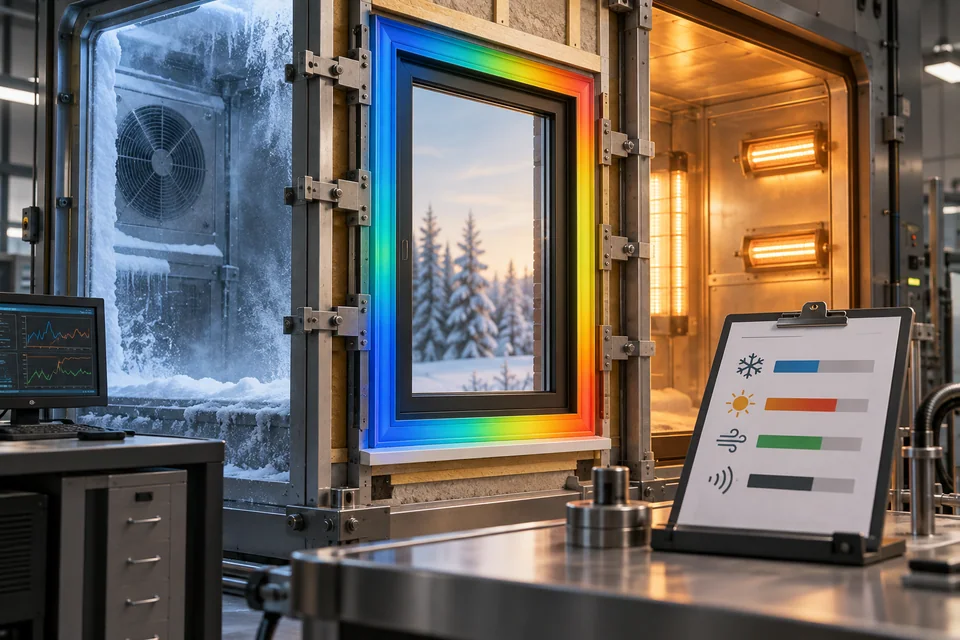
No single brand or product line is best for every Canadian house, and HAUSE Home does not rank them. Plenty of 'best windows' lists online are written for United States or overseas climates and certification rules, which differ from Canada's; ENERGY STAR sets separate criteria in each country. A more useful definition of best is a specification: the performance, construction and service your windows must deliver. Once you have one, any product that meets it can compete on price, lead time and installer quality.
The seven tests below make up that specification. A product that passes all seven, installed well, is a strong choice for your house whoever makes it.
| Test | What to check | Where to find it |
|---|---|---|
| 1. Certification | ENERGY STAR certified under the Canadian specification | The window's label and NRCan's searchable product list |
| 2. Energy ratings per type | Whole-window U-factor, Energy Rating, SHGC and VT for each operating type | Written quote or the maker's rated product data |
| 3. Wind and water grade | Performance grade and water penetration test pressure suited to your exposure | The label under the North American Fenestration Standard and Canadian Supplement |
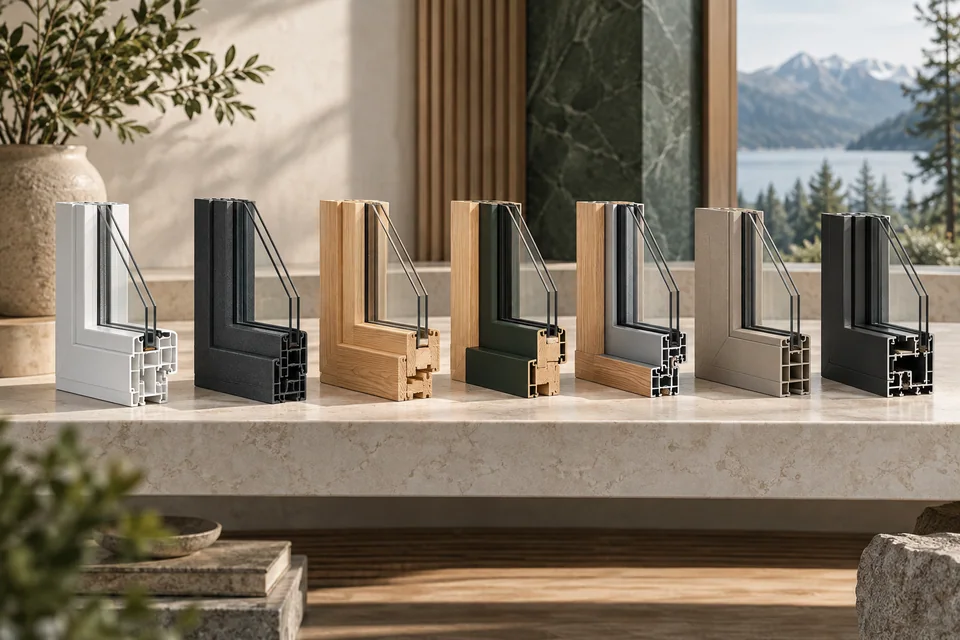
| 4. Frame | Material suited to the size, colour and exposure of each opening | A corner cut-away sample of the actual profile |
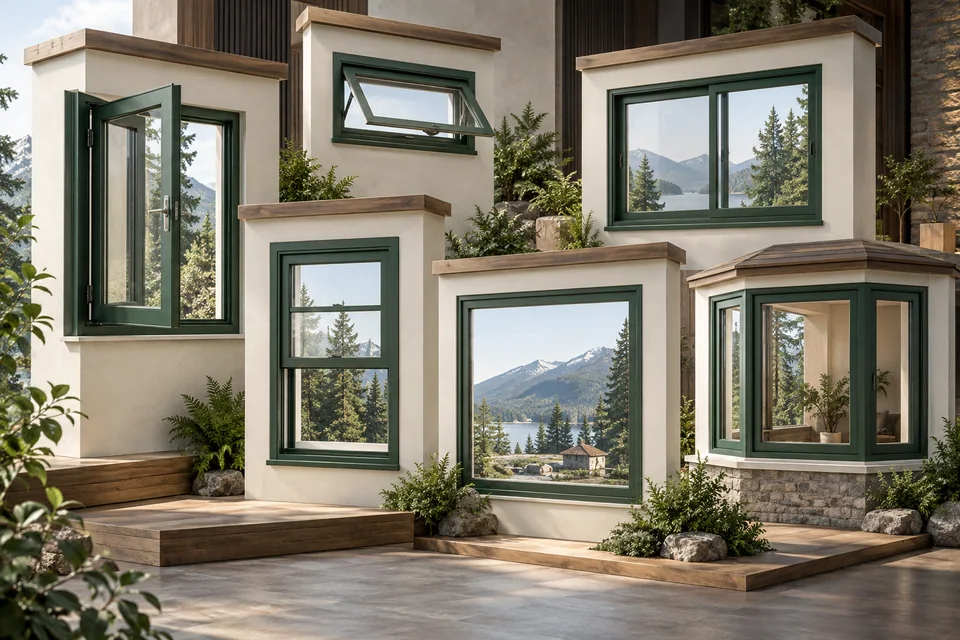
| 5. Operation | Type that fits ventilation, egress and airtightness needs room by room | A working sample of the same type and size |
| 6. Hardware and glass options | Locks, hinges, operators, safety glass where needed, laminated glass where useful | Product specification sheet |
| 7. Warranty and service | Frame, glass seal, hardware and finish terms; labour; transfer; parts supply | The written warranty and the installer's service terms |
02 /Which energy ratings should the best windows meet?
Every window you buy should be ENERGY STAR certified in Canada, which under version 5.0 of NRCan's specification, in effect since January 1, 2020, means a U-factor of 1.22 W/m²·K or lower, or an Energy Rating of 34 or higher, with air leakage of 1.5 L/s/m² or less. NRCan says certified windows are about 20 percent more energy efficient than the average window. Certification is the floor for a best-in-class product, not the ceiling.
The next step up is NRCan's ENERGY STAR Most Efficient designation. Its 2025 criteria for windows and sliding glass doors, effective from January 1 to December 31, 2025, required a U-factor of 1.05 W/m²·K or lower or an ER of 40 or higher, and NRCan describes Most Efficient models as up to 55 percent more energy efficient than average ones. When this guide was checked in September 2026, NRCan's pages still showed the 2025 criteria as the most recent, so confirm the current level before you shop.
| Rating | Minimum to ask for | Stronger target | Where it matters most |
|---|---|---|---|
| U-factor (W/m²·K) | 1.22 or lower | 1.05 or lower (2025 Most Efficient) | North and east walls, large glass, cold regions |
| Energy Rating (ER) | 34 or higher | 40 or higher (2025 Most Efficient) | South-facing glass that collects winter sun |
| Air leakage (L/s/m²) | 1.5 or less | Lower; fixed and casement units tend to be tighter | Windy sites, draughty rooms, noisy streets |
| SHGC | Chosen by orientation | Lower on hot west glass, higher on south | Rooms that overheat or that you want sun-warmed |
| VT | As high as the glass package allows | Compare products with similar U-factors | Rooms where daylight matters |
Ask for the ratings of each operating type, not just the best one in the series: a fixed window and a casement from the same line can rate differently. Treat centre-of-glass figures in advertising as a different measurement from the whole-window values on a label. ENERGY STAR window ratings explained decodes each number.
03 /How do you choose the glass for each side of the house?
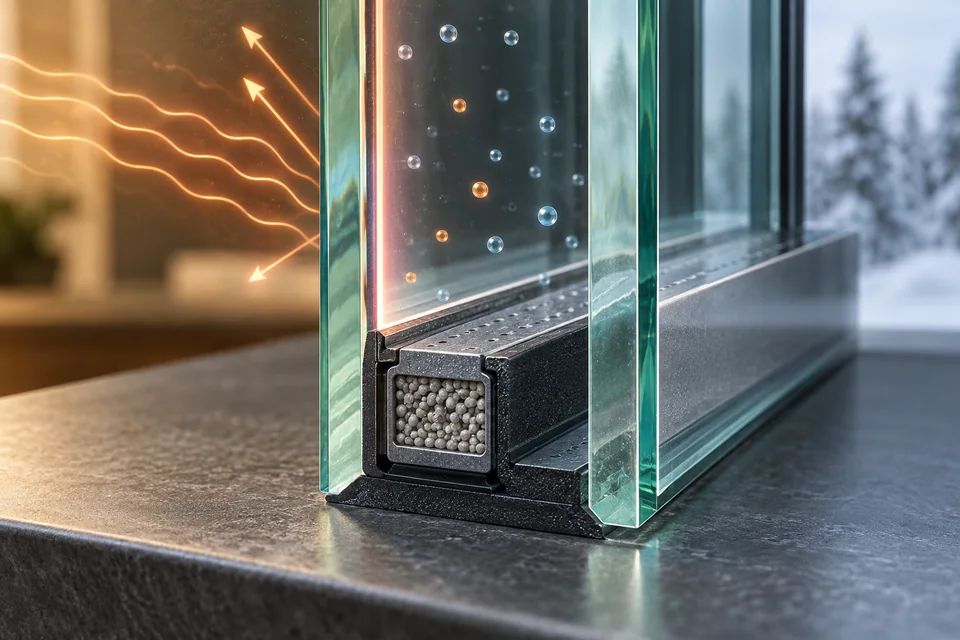
Choose glass by the wall it sits in. NRCan's advice is to install windows with higher insulation values on the east and north sides of the house to reduce heat loss. South-facing glass in a heating climate can use a coating that admits more of the sun's heat, and west-facing glass in rooms that overheat in summer benefits from a lower solar heat gain coefficient and outside shading. The best glass package for a house is often two or three packages, one per orientation.
Keep each elevation visually consistent, because different coatings can look slightly different side by side, and see a sample in daylight before ordering. Low-e glass, gas fill and spacers explains how coating position changes solar gain, and triple-pane vs double-pane windows covers where the third pane pays off. If traffic noise matters, a glass package tuned for sound may beat an extra pane; see noise-reducing windows.
04 /Do wind and water ratings matter for replacement windows?
Yes, especially on exposed sites. CMHC's 2005 consumer fact sheet explained that all windows sold in Canada must be evaluated for airtightness, watertightness and wind load resistance, and that a rating describes a tested sample for comparison, not how a window will perform once installed. Under that older CSA A440 scheme it suggested B2 for water resistance and C2 for wind resistance as the minimums advisable for low-rise houses in most of Canada, with higher levels in exposed regions.
| Region | Water resistance | Wind resistance |
|---|---|---|
| Most of Canada | B2 | C2 |
| Haida Gwaii | B5 | C3 |
| Western Vancouver Island | B4 | C3 |
| Southeastern Alberta and southern Saskatchewan | B3 | C2 in Saskatchewan; C3 in Alberta south of High River |
| Cardston area of Alberta | B2 or B3 depending on location | C4 |
| Gaspé, Prince Edward Island, Gulf of St. Lawrence, coastal Newfoundland and Labrador | B4 | C3 to C4 depending on location |
CMHC added that building height and sites such as hilltops, promontories and bluffs call for higher ratings than these, and advised discussing rating levels with a design professional when replacing windows. Current products are rated under the North American Fenestration Standard with its Canadian Supplement, usually shown as a performance grade and a water penetration test pressure. Ask the supplier to confirm, in writing, that the grade suits your house.
05 /Which frame material and window type are best?
The best frame depends on the opening. Good vinyl is the value choice for standard sizes in white or light colours. Fibreglass is stiffer and moves less with temperature, so it suits large units, dark exterior colours and slim profiles, and it can be repainted. Clad wood gives a wood interior with a low-maintenance exterior. Window frame materials compared and fibreglass vs vinyl windows go deeper, and the planner shows how each changes a planning range.
- Airtightness: CMHC's fact sheet notes fixed windows tend to rate better for airtightness than operable ones, and sliders tend to leak more than casements.
- Ventilation: casements catch breezes; awnings can stay open in light rain.
- Egress: every bedroom still needs a window that opens wide enough to escape through; see permits and egress.
- Access: sliders and hung windows suit walkways and decks where an outswinging sash would be in the way.
The window types guide matches types to rooms.
06 /What separates a well-built window from a cheap one?
Two windows with the same ratings can still differ in how long they keep performing. Look at a cut-away corner and operate a sample of the same type and size. CMHC encourages buyers to test operation themselves, noting that showroom models may have been opened and closed many times and that dealers are unlikely to display windows that work poorly.
- Corners: clean, full-strength welds on vinyl; tight, sealed joints on fibreglass and clad frames.
- Reinforcement: stiffeners inside long sashes, meeting rails and patio door panels.
- Hardware: operators, hinges and locks sized for the sash weight, including triple glazing; multiple locking points on tall sashes.
- Weatherstrip: continuous, replaceable seals, ideally compression seals on operable units.
- Drainage: clear weep paths in the sill that you can keep open.
- Voluntary tests: CMHC's fact sheet lists ease of operation, resistance to forced entry, condensation resistance and screen strength as optional CSA tests; ask which the product has passed, and do not rely on a forced-entry rating alone for security.
07 /How do warranty and service decide the best window?
A warranty is the manufacturer's own forecast of how long its parts will last, and service is what makes it worth anything. Compare the frame, glass seal, hardware and finish terms separately, whether labour is covered, whether coverage is pro-rated, and whether it transfers to the next owner. Ask how long the company has supplied parts for older lines, because a discontinued operator can turn a small repair into a replacement.
- Write your specification
Ratings per wall, wind and water grade, frame by opening, operation by room.
- Shortlist two or three product lines
Keep only lines that meet every point, confirmed on NRCan's searchable product list.
- Price them
Run your openings through the Window Replacement Planner, then collect written quotes.
- Compare like with like
Use the Window Quote Checker to line up price per window, warranties and inclusions.
- Choose the installer as carefully as the window
The quotes and warranties guide explains what each warranty should say. When your specification is ready, you can request quotes and attach it.
FAQQuestions people ask
What are the best rated replacement windows in Canada?
There is no official ranking of brands. The closest thing is NRCan's certification: ENERGY STAR for all qualifying products and the Most Efficient designation for the top performers, both searchable on NRCan's product list. Compare products that meet your specification on price and service.
Are the best replacement windows always triple pane?
No. Triple glazing is often the right choice for north and east walls and cold regions, but a well-chosen double-glazed unit can suit south-facing glass or mild coastal climates. Compare certified whole-window ratings rather than pane counts.
Is a more expensive window always a better window?
Not necessarily. Price reflects frame material, glass, size, colour and brand positioning as well as quality. A mid-priced product that meets your specification and is installed well can outperform a premium one installed poorly.
Which replacement windows suit an older house?
If the old frames are sound and the house has heritage character, inserts or restored sashes with storm windows can keep the look; NRCan notes inserts can suit heritage homes. Where frames are rotten or leaking, full-frame replacement is the safer choice.
Should every window in the house be the same product?
The same product series keeps looks, hardware and warranties consistent, but the glass can vary by wall and the frame by opening. Many houses mix fibreglass for large units with vinyl elsewhere.
Do window ratings from the United States apply in Canada?
Not directly. ENERGY STAR sets separate criteria for each country, so look for certification under the Canadian specification and the model on NRCan's searchable product list, even when a product is also sold in the United States.
SOURCESSources and further reading
- Natural Resources Canada — Windows, doors and skylights: ENERGY STAR Canada technical specification
- Natural Resources Canada — ENERGY STAR Most Efficient criteria for windows and sliding glass doors (2025)
- Natural Resources Canada — ENERGY STAR certified windows, doors and skylights
- Natural Resources Canada — Key features and helpful tips: windows, doors and skylights
- CMHC — About Your House: The ABC's of windows (2005, PDF)