Choose a window company on evidence rather than rankings: a written quote naming the product series and installation method for each opening, any provincial licence that applies, such as an RBQ licence in Quebec or an Alberta prepaid contracting licence, proof of liability insurance and workers' compensation coverage, trained installers, written product and workmanship warranties, a sensible deposit and no pressure to sign.
- The crew decides whether a certified window leaks or draughts; NRCan points homeowners to the Window Wise certification program for trained installers.
- Licensing is provincial: Quebec requires an RBQ licence for anyone doing home renovation work for you, and Alberta licenses businesses that sell prepaid contracts in your home.
- Ontario requires a written contract for home renovation work worth more than $50 and recommends keeping deposits to no more than 10 percent.
- Contracts signed at home carry a 10-day cancellation right in Alberta and Ontario.
- Know who will actually install the windows, who measures, and who handles warranty calls before you choose.
01 /What makes a window company the right choice for your house?
There is no single best window replacement company, in your city or anywhere else, and HAUSE Home does not rank them. The right company for you is one that sells a product line whose certified ratings and warranty you have checked, installs it the way your openings need, puts everything in writing, and will still answer the phone when a sash sticks two winters later. Everything on this page is about testing those four things before you sign.
Start by working out what kind of business you are talking to, because it decides who is responsible for what. Window replacement is sold in three main ways, and each can be done well or badly.
| Type of business | Typical strength | What to confirm |
|---|---|---|
| Manufacturer that installs its own product | One company answers for the window and the installation | Whether installers are employees or subcontractors, and how long the workmanship warranty runs |
| Dealer or renovation company selling one or more lines | Choice of products and a local contact | Whose crew installs, who you call for a product defect, and whether the dealer is authorized for warranty service |
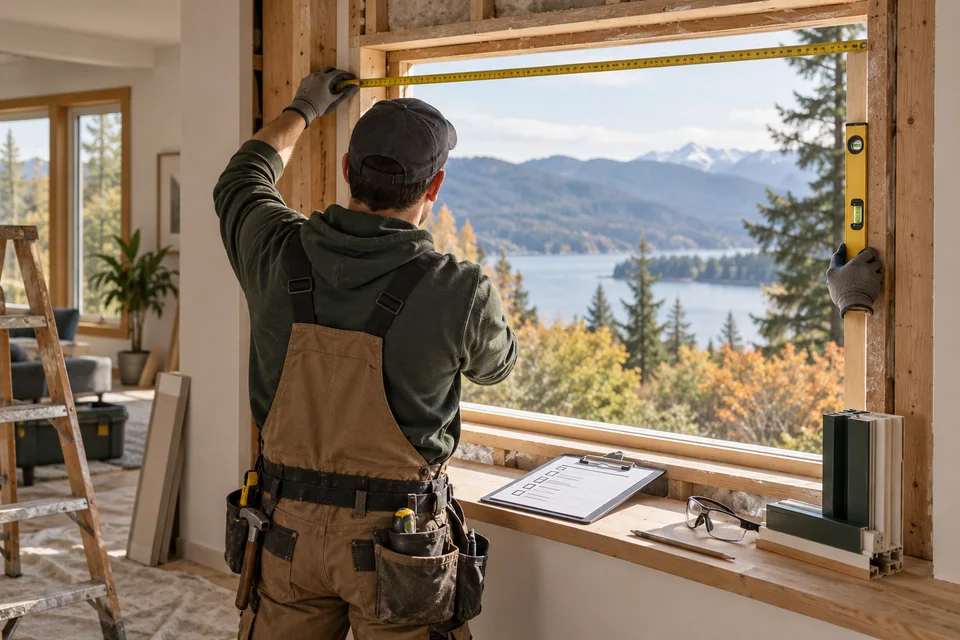
| Independent installer, with windows you buy yourself | Flexibility and sometimes lower labour cost | Who measures and carries the risk of wrong sizes, and whether the maker's warranty applies to their installation |
Whichever you choose, ask who will be on site. Alberta's advice on hiring a contractor says to spell out subcontracted work in the contract, and Ontario's list of what a renovation contract should include names all subcontracted trades and who pays them. If the salesperson cannot tell you who the installers are, find out before signing.
02 /Which licences should a window installer have?
Licensing for renovation contractors is set by each province, and sometimes a municipal business licence applies as well. Three examples show how different the rules are.
- Quebec. The Régie du bâtiment du Québec (RBQ) says everyone who does home renovation work for you must hold an RBQ licence, with the subclasses required for the work. Check the licence number in the RBQ's online repertory, and make sure the name on the contract matches the licence holder exactly. The RBQ notes that a valid licence carries security that can compensate clients who have suffered harm, under set criteria.
- Alberta. A business that solicits, negotiates or signs prepaid contracts in person anywhere other than its own premises, and takes money before all the work is done, needs a prepaid contracting licence. The province offers an online search to check whether a business is licensed. Alberta also prohibits selling windows door-to-door without an invitation; see window replacement in Alberta.
- Ontario. The province's consumer guidance for home renovations focuses on the contract rather than a licence: renovation contracts worth more than $50 must be in writing, and it lists what they should contain.
- Elsewhere. Ask your provincial consumer protection office which licences apply to renovation contractors, and your municipality whether a business licence is required.
03 /What insurance and workers' compensation should you ask for?
Ask for a certificate of liability insurance and for proof of workers' compensation coverage before work starts. Window work means ladders, upper floors, heavy glass and cutting tools, and you want an accident to be the contractor's insurer's problem, not yours. Alberta's hiring advice tells homeowners to make sure the contractor and tradespeople have Workers' Compensation Board coverage and to ask for certificates of public liability and property damage insurance.
Workers' compensation rules differ by province. In Ontario, for example, the WSIB says a clearance certificate is not required when a home's resident or a family member hires a contractor for home repairs or renovations. That removes one obligation from the homeowner; it does not tell you whether the crew is covered. It is still reasonable to ask, and to check any other province's rules with its workers' compensation board.
04 /What training should window installers have?
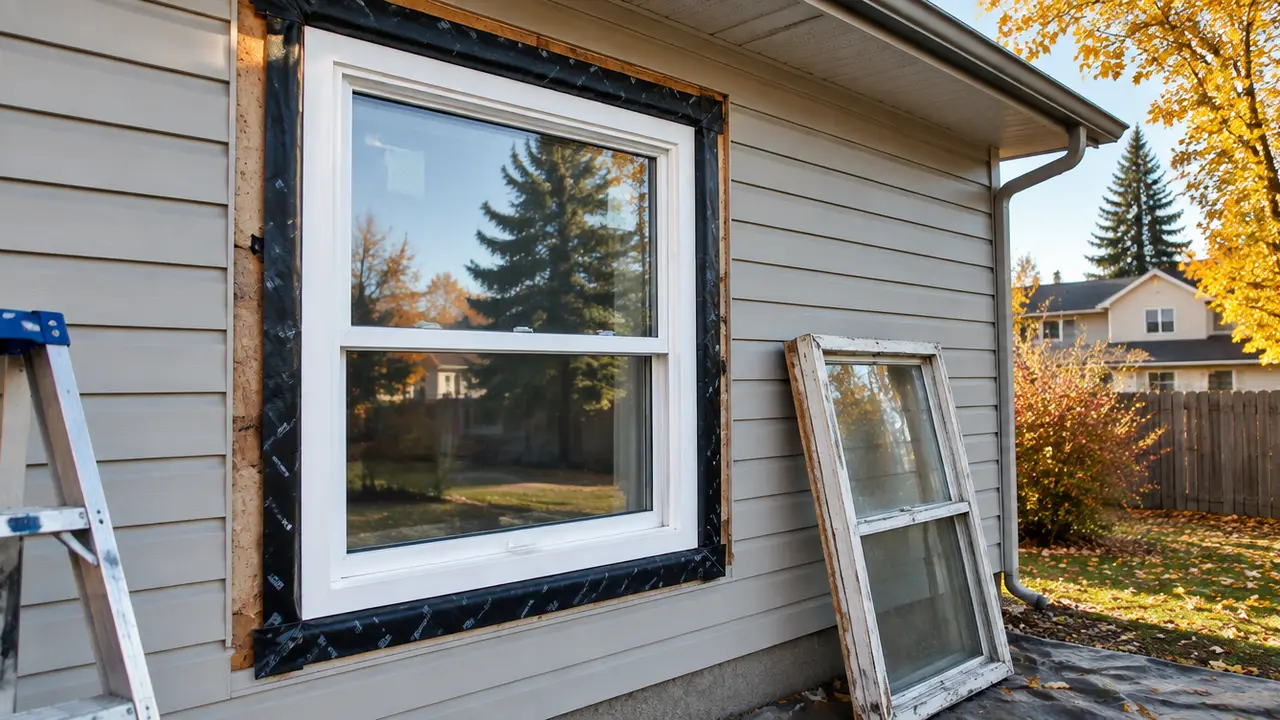
Installation decides real-world performance, and NRCan says so plainly on its ENERGY STAR windows page: a poorly installed window, door or skylight may cause condensation, cold drafts or water leaks. The same page points homeowners to the Window Wise certification program, which trains installers in correct installation techniques. Ask whether the crew leader who will be at your house holds a certification, not just whether the company mentions one.
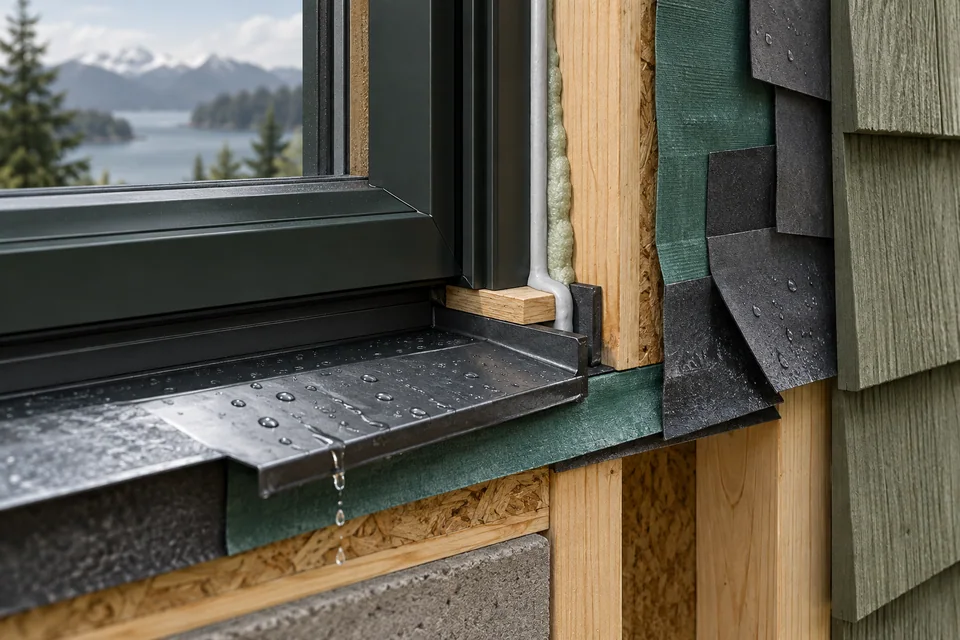
Paperwork only goes so far. A capable installer will explain, without being pressed, how they will handle your specific openings: insert or full-frame and why, how the sill is flashed, what goes in the gap between frame and wall, how the interior air seal is made, and how stucco or brick will be finished. NRCan's retrofit guide adds two questions worth asking every company: whether it has experience with the type of work you want done, and whether it offers a third-party warranty on products and services. Compare the answers with installation, flashing and sealing.
05 /What should a window replacement contract say?
A window contract should describe the job well enough that a stranger could tell whether it was done. Ontario's guidance lists what a renovation contract should contain, and Alberta's hiring advice covers much of the same ground. Together with the window-specific items the Window Quote Checker looks for, that gives this checklist.
| Clause | Why it matters |
|---|---|
| Company name, address and contact details | You need to reach the business that holds the warranty |
| Product series, type, size, frame and glass for each opening | Lets you check ratings and prevents substitutions |
| Installation method for each opening | Insert and full-frame are different jobs at different prices |
| Inclusions: trim, capping, flashing, insulation, disposal | The items most often left out of low quotes |
| Who measures, and when | Puts the risk of wrong sizes on the company |
| Start and completion dates | Sets expectations for lead time and installation |
| Total price, taxes, deposit and payment schedule | Payments should follow progress, not run ahead of it |
| Who obtains any permits | Required when openings change size or type |
| Product and workmanship warranties | Two separate promises, both in writing |
| Subcontracted trades and who pays them | Tells you who will be in your house |
| Cleanup and debris removal | Old windows and packaging have to go somewhere |
| Price for hidden repairs such as rot | Unit rates agreed in advance avoid surprises |
06 /How much deposit is reasonable, and when can you cancel?
Deposits are normal for windows because each unit is built to order after the final measure. Ontario's home renovation guidance recommends keeping down payments to a minimum, no more than 10 percent, and Alberta's advice is to find out whether a deposit is refundable and under what conditions. Whatever you agree, get the amount, what it pays for and the refund terms in writing, and tie later payments to delivery and completion.
Cancellation rights depend on where and how you signed. Alberta's Consumer Bill of Rights says you can cancel a door-to-door sale within 10 days of receiving your copy of the signed contract, and a prepaid contracting contract up to 10 days after you receive your copy. Ontario's guidance says a home renovation contract worth $50 or more signed in your home carries a 10 calendar-day cooling-off period in which you may cancel for any reason without a cancellation fee; if work has started, you may owe a reasonable amount for work and materials already provided. Other provinces have their own rules.
07 /Which red flags should make you walk away?
- An uninvited salesperson at the door offering windows, which Alberta prohibits outright.
- A price quoted without anyone measuring or looking at the openings.
- A request for a large deposit with no written schedule.
- No written contract, or no completion date.
- Only a post office box or an answering service, a warning sign Alberta's hiring advice lists.
- Claims to represent a government program; NRCan has said it has not approved third parties to contact homeowners unsolicited about its affordability program.
- Reluctance to name the product series, the installation method or the crew.
- A plan to 'just caulk it' where water has been getting into the wall.
When the finalists are clear, put their quotes into the Window Quote Checker, read the quotes and warranties guide for what each warranty should say, and compare the totals with the window replacement cost guide. HAUSE Home is an independent information and service-request network, not an installer; you can request quotes and use this page to vet whoever responds.
FAQQuestions people ask
How do I check if a window company is licensed?
It depends on the province. In Quebec, look up the RBQ licence number in the RBQ's online repertory. In Alberta, use the Government of Alberta's search to see whether a business holds a prepaid contracting licence. Elsewhere, ask your provincial consumer protection office.
Should my window installer be Window Wise certified?
It is a good sign. NRCan's ENERGY STAR windows page points homeowners to the Window Wise certification program, which trains installers in correct techniques. Ask whether the person leading your installation holds it, and still ask them to describe their method.
Can I buy windows myself and hire someone to install them?
Yes, but you take on more risk. You may carry the cost of sizing errors if you measure, and product and workmanship warranties come from different parties. Check that the maker's warranty applies to the installer's work before ordering.
Is it better to hire the window manufacturer or a dealer?
Either can work. A manufacturer that installs gives one point of contact; a dealer may offer more product choice. What matters is who installs, who measures, and who answers warranty calls, all in writing.
What happens to my warranty if the window installer goes out of business?
The manufacturer's product warranty normally continues under its own terms, but the installer's workmanship warranty may end with the business. NRCan suggests asking whether a company offers a third-party warranty on products and services.
Do window companies need workers' compensation coverage?
Rules differ by province. Alberta's hiring advice says to make sure the contractor and tradespeople have WCB coverage. In Ontario, the WSIB does not require a clearance when a resident hires a contractor for home renovations. Ask for proof either way.
SOURCESSources and further reading
- Natural Resources Canada — ENERGY STAR certified windows, doors and skylights
- Régie du bâtiment du Québec — Choosing a contractor
- Government of Alberta — Prepaid contracting licence
- Government of Alberta — Consumer Bill of Rights
- Government of Ontario — Your rights when starting home renovations or repairs