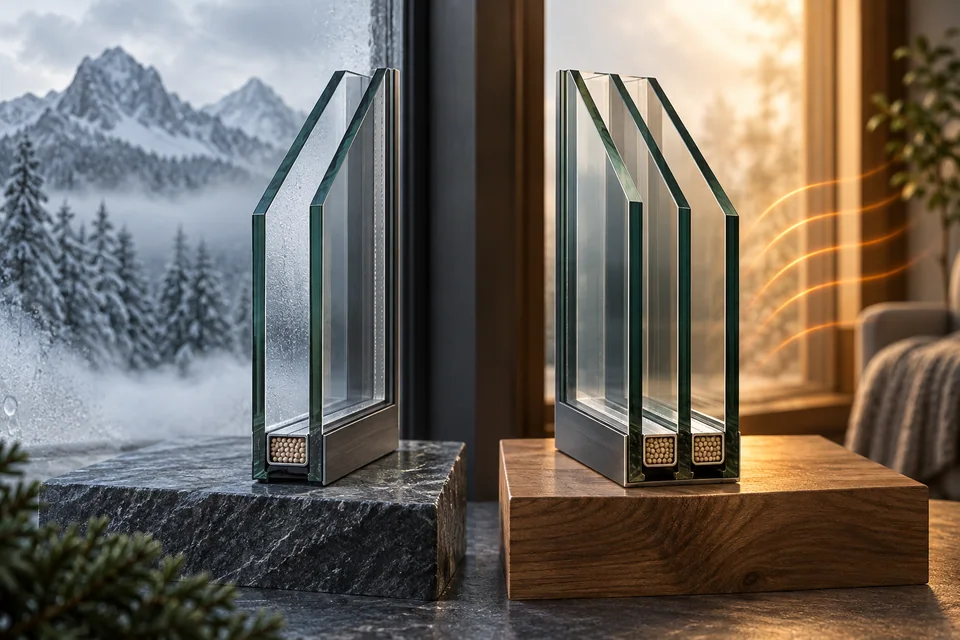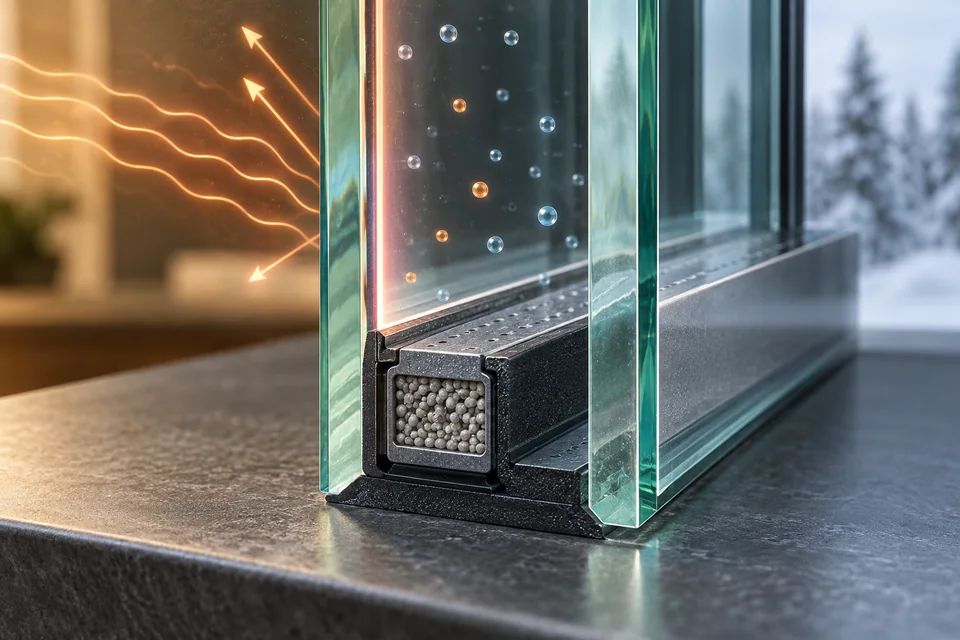
A window's glass package does most of its energy work. Low-e coatings reflect heat back toward its source, argon or krypton gas slows heat flow across the gap, and warm-edge spacers keep the glass edge warmer so condensation forms less. Where the coatings sit decides how much sun heat gets in, so the right package depends on which way each window faces.
- Low-e (low-emissivity) coatings are microscopically thin metal or metal-oxide layers that reflect long-wave heat while passing most visible light.
- The surface a coating sits on changes the solar heat gain: the same glass can be tuned for winter sun or for summer shade.
- Argon is the standard gas fill; krypton performs better in narrow gaps and is mostly used in triple glazing.
- Warm-edge spacers reduce heat loss at the edge of the glass, where condensation starts first.
- Two of the Window Quote Checker's ten inclusions are 'low-e and gas fill specified' and 'spacer type specified'.
01 /What makes a window energy efficient?
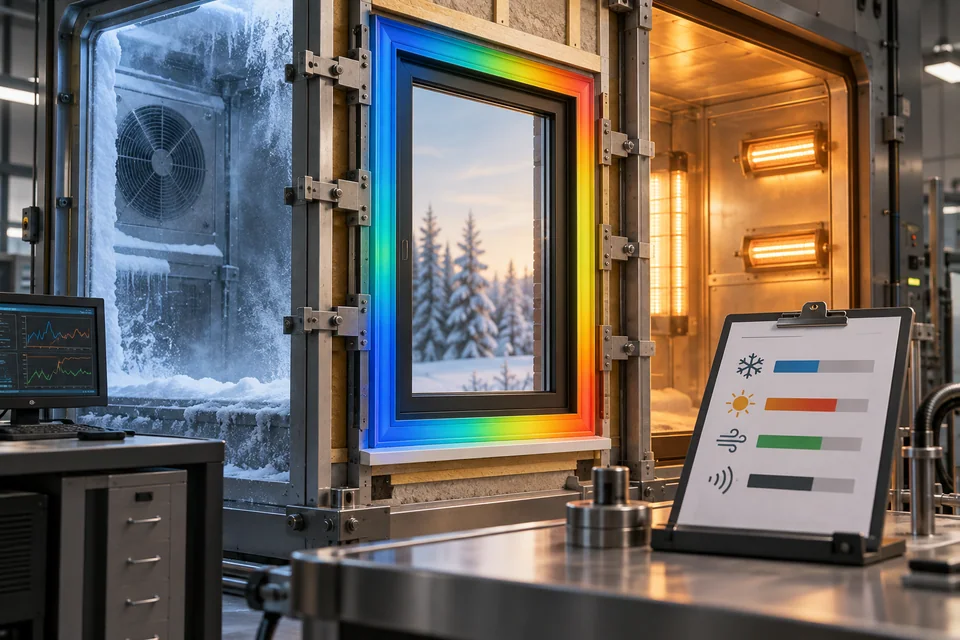
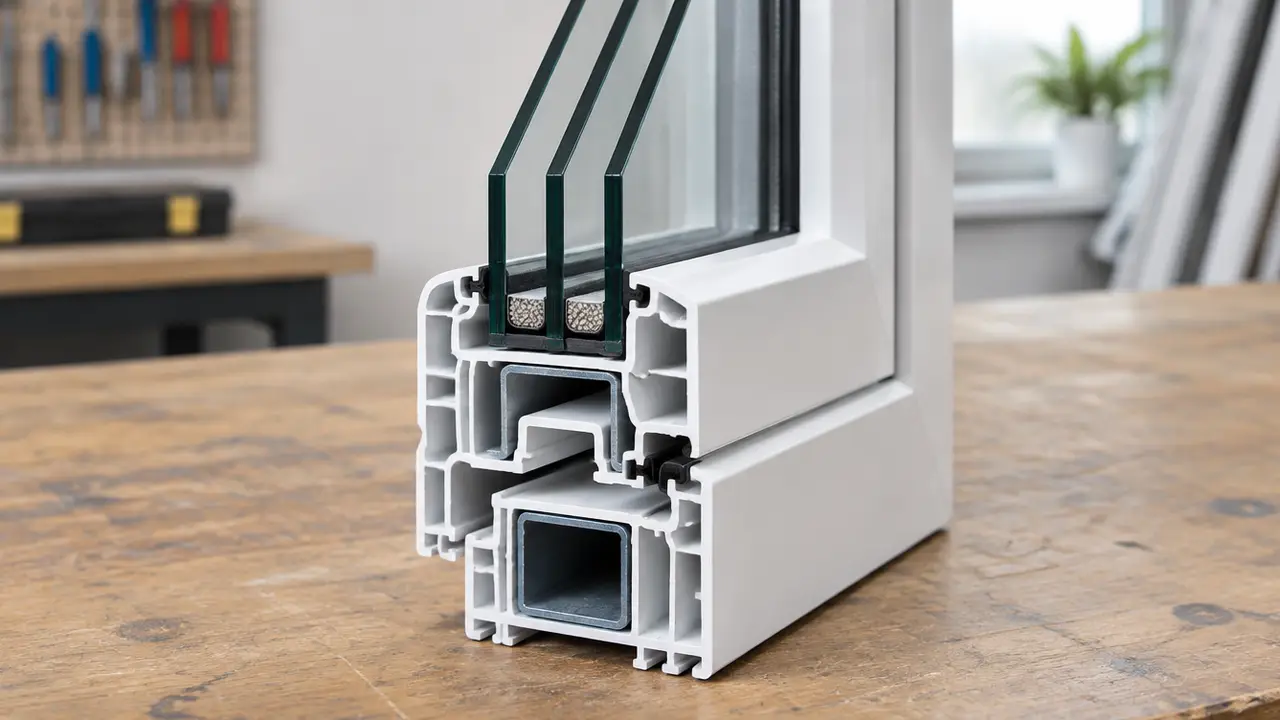
A window is energy efficient when it limits heat flow through the glass, the edge of the glass and the frame, and lets very little air through. NRCan lists the features that achieve this: double, triple or even quadruple glazing; low-emissivity (low-e) glass; inert gas such as argon or krypton in the sealed unit; low-conductivity or warm-edge spacer bars; insulated frames and sashes; and good airtightness. Most of a window's area is glass, so the glass package does most of the work.
Surfaces are numbered from outside to inside. In a double unit, surface 1 faces outdoors, surfaces 2 and 3 face the sealed gap, and surface 4 faces the room. A triple unit has surfaces 1 to 6. Coatings go on the protected surfaces inside the gaps unless they are a special durable type made for an exposed face.
02 /How does low-e glass work?
Low-e glass carries a coating so thin it is nearly invisible, made of layers of metal or metal oxide that reflect long-wave infrared radiation, the heat given off by warm objects like people, furniture and heaters. In winter it reflects room heat back inside instead of letting the glass radiate it out. Visible light passes through with only a small reduction, and much of the sun's ultraviolet is blocked.
- Soft-coat (sputtered) low-e: applied in a vacuum chamber, usually with better thermal performance, and must be sealed inside the unit.
- Hard-coat (pyrolytic) low-e: fused to the glass during manufacture; more durable, generally less effective, and sometimes used on exposed surfaces.
- Multiple coatings: high-performance units may use two or three coated surfaces, especially in triple glazing.
- Room-side coatings: a durable coating on the surface facing the room can lower the U-factor further, but it also makes that surface colder, which can increase interior condensation risk in humid homes.
03 /How does coating position change solar heat gain?
Where a low-e coating sits changes how much of the sun's heat enters the room, measured as the solar heat gain coefficient (SHGC). A coating on the outer pane's inside surface (surface 2 of a double unit) generally rejects more solar heat, giving a lower SHGC. A coating on the inner pane's gap-facing surface (surface 3) keeps more of the sun's heat, giving a higher SHGC. Coating chemistry matters too: some coatings are built specifically for high solar gain, others for solar control.
| Wall faces | Priority | Glass to ask for |
|---|---|---|
| South | Collect winter sun, avoid summer glare with overhangs | Higher-SHGC low-e; ER is a useful comparison |
| North | Limit heat loss; little direct sun | Lowest U-factor you can afford; triple glazing |
| East | Morning sun, cold winter mornings | Low U-factor; NRCan suggests higher-insulation windows on north and east sides |
| West | Hot late-afternoon summer sun | Lower-SHGC low-e and exterior shading |
| Shaded by trees or neighbours | Heat loss dominates | Low U-factor; SHGC matters less |
Low-e glass is sometimes described as tinted. Most residential low-e coatings are close to neutral, but low-SHGC coatings can look slightly grey, green or reflective, especially from outside or when two different coatings sit side by side. Ask to see a sample of the exact glass package in daylight, and order every window on one elevation with the same glass so the house looks consistent.
04 /What does argon or krypton gas do?
Argon and krypton are inert, non-toxic gases that conduct heat less readily than air. Filling the sealed gap with one of them lowers the U-factor by slowing conduction and convection across the space between the panes. Argon is the common, cost-effective choice. Krypton insulates better in narrow gaps, which is why it is mostly used in triple glazing, where it allows good performance in a thinner, lighter unit.
Gap width matters. Too narrow and conduction increases; too wide and the gas starts to circulate, carrying heat from the warm pane to the cold one. Manufacturers size gaps for the gas they use. Some gas is lost through the edge seal over many years; a good seal slows it. You cannot see gas fill, so it has to be stated on the quote and on the rated glass package.
05 /What is a warm-edge spacer, and why does it matter?
A spacer is the strip that holds the panes apart around the edge of a sealed unit. Traditional spacers were hollow aluminum, which conducts heat quickly and makes the glass edge the coldest part of the window. Warm-edge spacers use less conductive materials, such as stainless steel, thermoplastic, structural foam or hybrid designs, so the edge stays warmer.
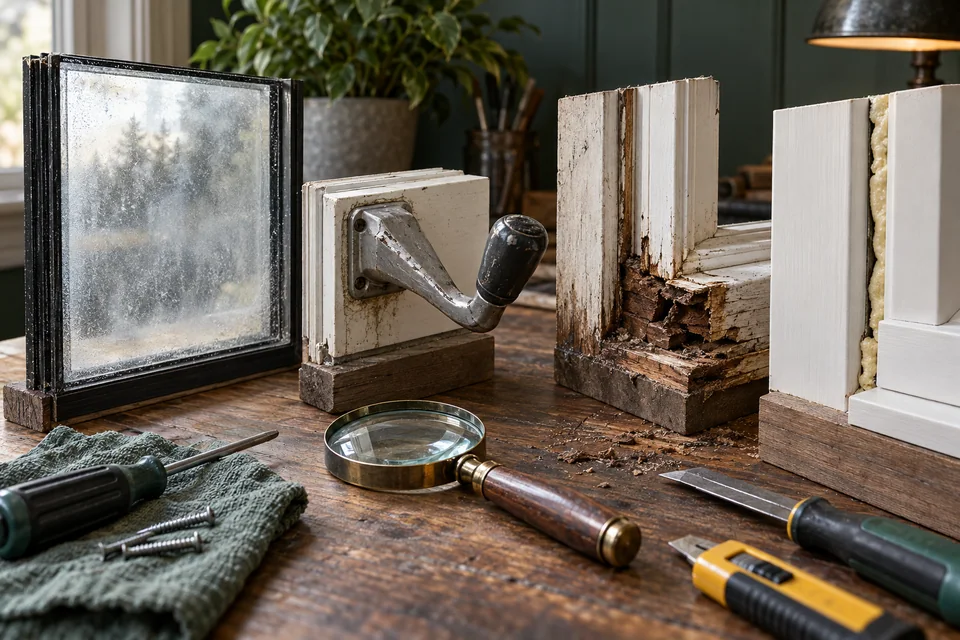
The practical benefit is condensation control. The bottom edge of the glass is where water and frost appear first on a cold night, and a warmer edge gives you more margin before it does. NRCan's condensation guidance names thermally improved spacer bars among the features that help. Spacers also carry the desiccant that absorbs moisture sealed into the unit and form part of the edge seal. Many units use a dual seal: a primary seal against moisture and gas loss, and a secondary structural seal. When the seal fails, moisture gets in, the desiccant saturates, and the unit fogs.
06 /What other glass options should you know about?
- Tempered glass: heat-treated to break into small granules rather than sharp shards. Building codes require safety glass in certain locations, such as doors and some low or large panes near floors, stairs and bathtubs; the installer should identify these for your openings.
- Laminated glass: two sheets bonded with a plastic interlayer that holds fragments together. It improves security, blocks more ultraviolet and damps sound.
- Obscure or frosted glass: for bathrooms and street-facing rooms; ask whether it changes the rated performance.
- Grilles between the glass: decorative muntins sealed inside the unit. They are easy to clean but can create a slightly colder path at the grille.
- Thicker glass: used for large panes and for sound control; it adds weight.
Every option changes weight, cost and sometimes the certified rating. Ask for the rating of the configuration you are actually buying.
07 /Why is there condensation on the outside of my new windows?
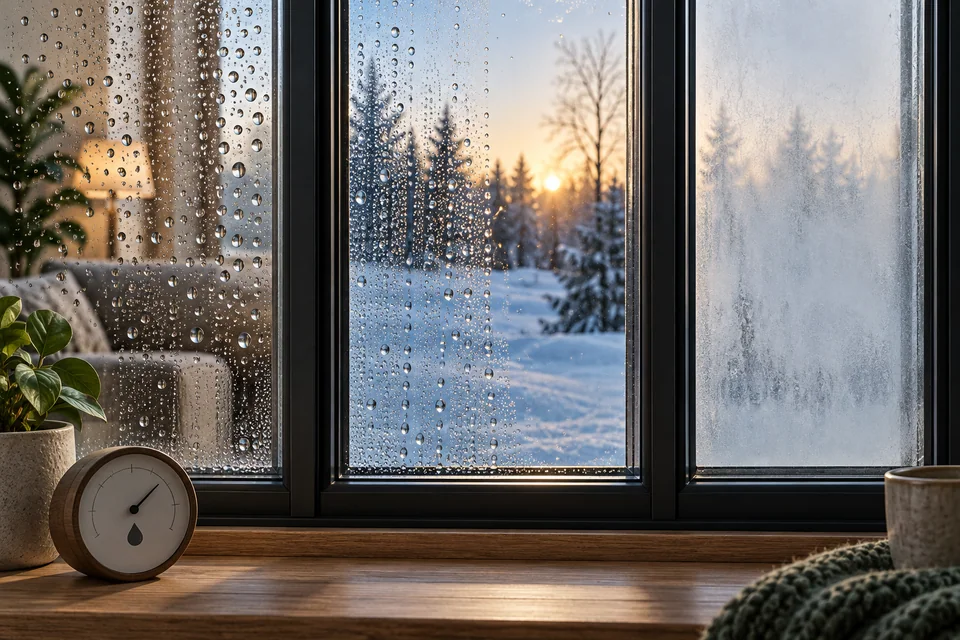
Condensation on the outside of the glass on a cool, clear morning is usually a sign the window insulates well. Because so little heat escapes, the outer pane cools to near the outdoor temperature overnight, and when the air is humid, dew forms on it just as it forms on a car windshield. It evaporates as the sun and air warm up, and it does not indicate a defect.
Condensation on the room side points to indoor humidity meeting a cold surface; condensation between the panes points to a failed seal. The first is a household humidity issue, the second a warranty or repair issue; the window condensation guide covers both in detail. See repair or replace windows for failed seals. Humidity control, attic moisture and frost are covered by our sister portal CalgaryAtticRain.ca.
08 /How should the glass package appear on a quote?
A quote should describe the glass package in enough detail that you could look up its rating. That means the number of panes, the number and type of low-e coatings, the gas fill, the spacer type, any tempered, laminated or obscure panes, and the certified whole-window U-factor and ER for each window type.
When quotes describe glass differently, the Window Quote Checker flags what each one leaves out and turns it into a question. For the bigger decision about adding a third pane, read triple-pane vs double-pane windows, and for how the numbers are certified, read ENERGY STAR window ratings explained. You can also request quotes and specify the glass you want by elevation.
FAQQuestions people ask
Is low-e glass worth it?
Yes for almost every Canadian home. Low-e coatings are standard on energy-efficient windows because they cut radiant heat loss in winter with little loss of daylight. The choice is usually which low-e coating, not whether to have one.
Are energy efficient windows tinted?
Most residential low-e glass looks nearly clear. Coatings designed to block more solar heat can look slightly grey, green or reflective. See a sample of the exact glass in daylight before ordering.
Does argon gas leak out of windows?
Some gas escapes through the edge seal over many years, and a well-made unit slows that loss. A unit that has fogged has a failed seal and has probably lost much of its gas.
Is krypton better than argon?
Krypton insulates better in narrow gaps and is used mainly in triple glazing to keep units thinner and lighter. It costs more. In a double unit with a normal gap, argon is the usual choice.
What is a warm-edge spacer?
A spacer made from low-conductivity material such as stainless steel, thermoplastic or foam instead of hollow aluminum. It keeps the edge of the glass warmer and reduces condensation along the bottom of the window.