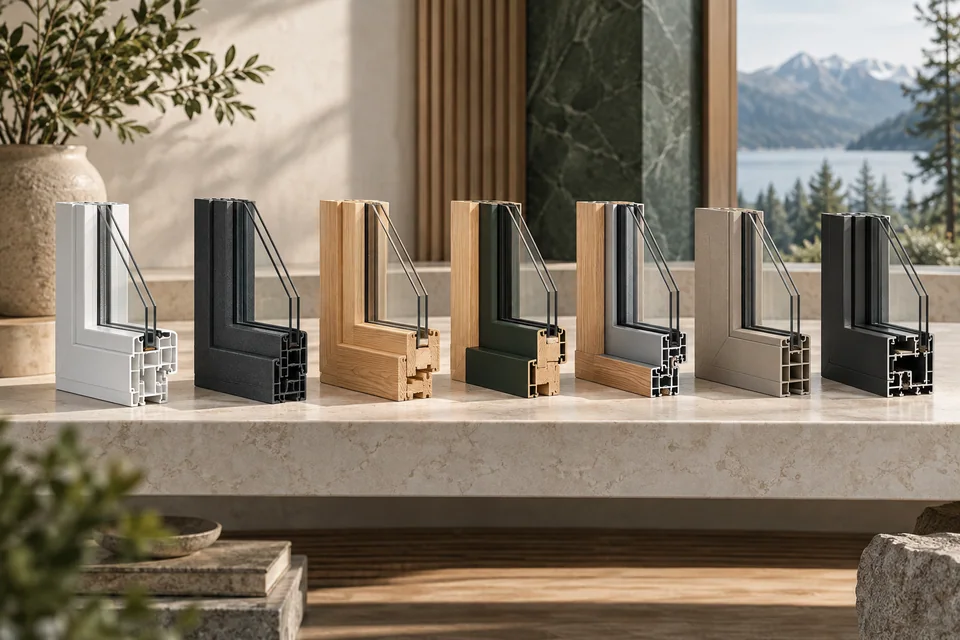
Seven frame materials cover almost every replacement window in Canada: vinyl, fibreglass, solid wood, wood-clad, aluminum-clad wood, composite and aluminum. Vinyl is the low-cost baseline; fibreglass adds stiffness; clad wood gives a wood interior with a low-maintenance exterior; aluminum is slim but conducts heat unless thermally broken. Pick by exposure, maintenance tolerance, look and budget.
- Frame material changes maintenance, appearance, stiffness and price more than it changes whole-window energy performance.
- Planner multipliers relative to vinyl: fibreglass ×1.3, wood-clad ×1.6, aluminum-clad wood ×1.7, aluminum ×1.1.
- Solid wood needs regular finishing, especially at the sill; cladding moves that maintenance off the exterior.
- Aluminum conducts heat quickly, so in cold climates it needs a thermal break to limit frost and condensation on the frame.
- Composite covers several different recipes; ask exactly what the frame is made of.
01 /Which window frame materials are available in Canada?
Replacement windows in Canada are built with seven main frame materials. Each is a trade-off between cost, stiffness, maintenance, thermal performance and appearance. The glass package, not the frame, covers most of a window's area and drives most of its energy performance, so frame choice is mostly about durability, looks and how much upkeep you will accept.
| Material | Strengths | Watch-outs | Planner multiplier |
|---|---|---|---|
| Vinyl (PVC) | Lowest cost, no painting, good insulation | Thermal movement, dark-colour limits, bulkier on some lines | ×1.0 (baseline) |
| Fibreglass | Stiff, stable, slim, paintable | Higher cost, fewer makers | ×1.3 |
| Solid wood | Warm look, repairable, traditional profiles | Regular exterior finishing, rot at sills | Not listed; see below |
| Wood-clad | Wood interior, protected exterior | Cladding joints must shed water | ×1.6 |
| Aluminum-clad wood | Wood inside, durable metal outside | Highest planner cost; cladding details matter | ×1.7 |
| Composite | Stable, rot-resistant blends | Recipes vary widely between products | Not listed; see below |
| Aluminum | Slim, strong, long-lasting finish | Conducts heat; needs a thermal break | ×1.1 |
02 /Vinyl and fibreglass: the two most common choices
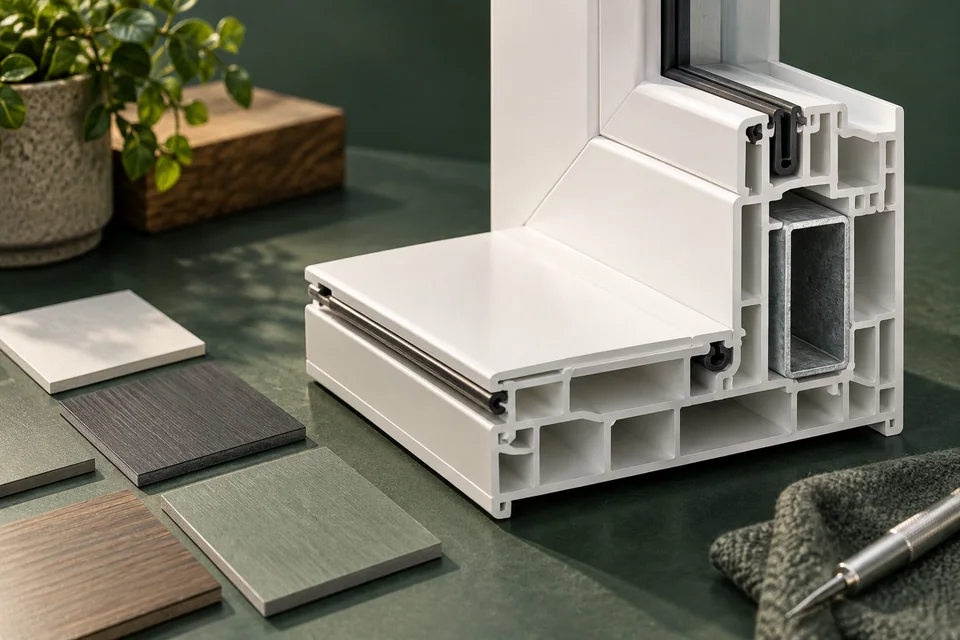
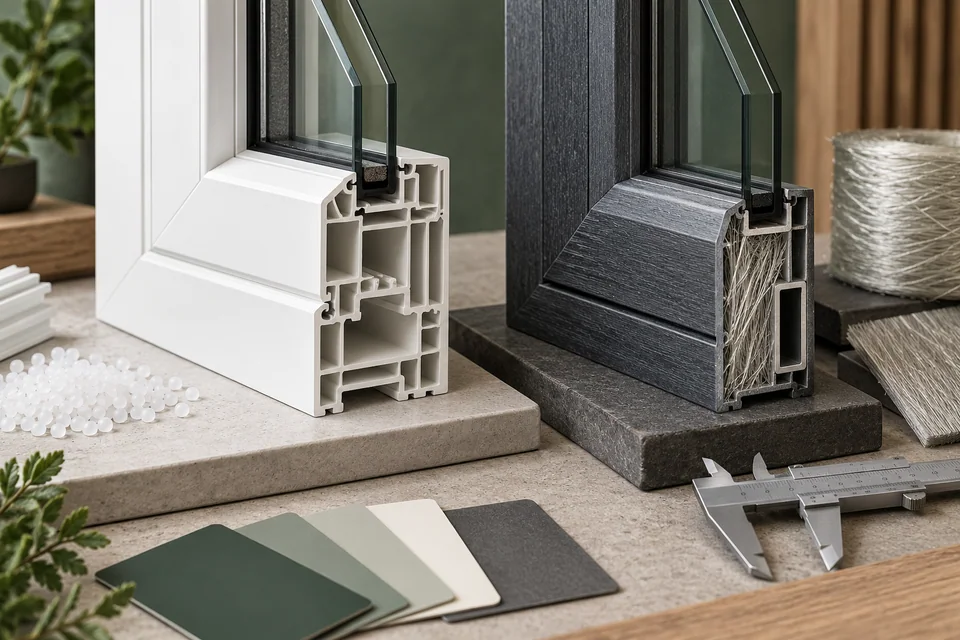
Vinyl is the most common replacement window frame in Canada because it is affordable, insulates well and needs no painting. Its limits are thermal movement, stiffness on large units and colour choice. Fibreglass is stiffer and moves much less with temperature, which makes it better for large units, dark colours and slim frames, at a higher price.
Both have their own detailed guides: vinyl windows pros and cons and fibreglass vs vinyl windows. The rest of this page covers the materials those guides do not.
03 /Are solid wood windows still a good choice?
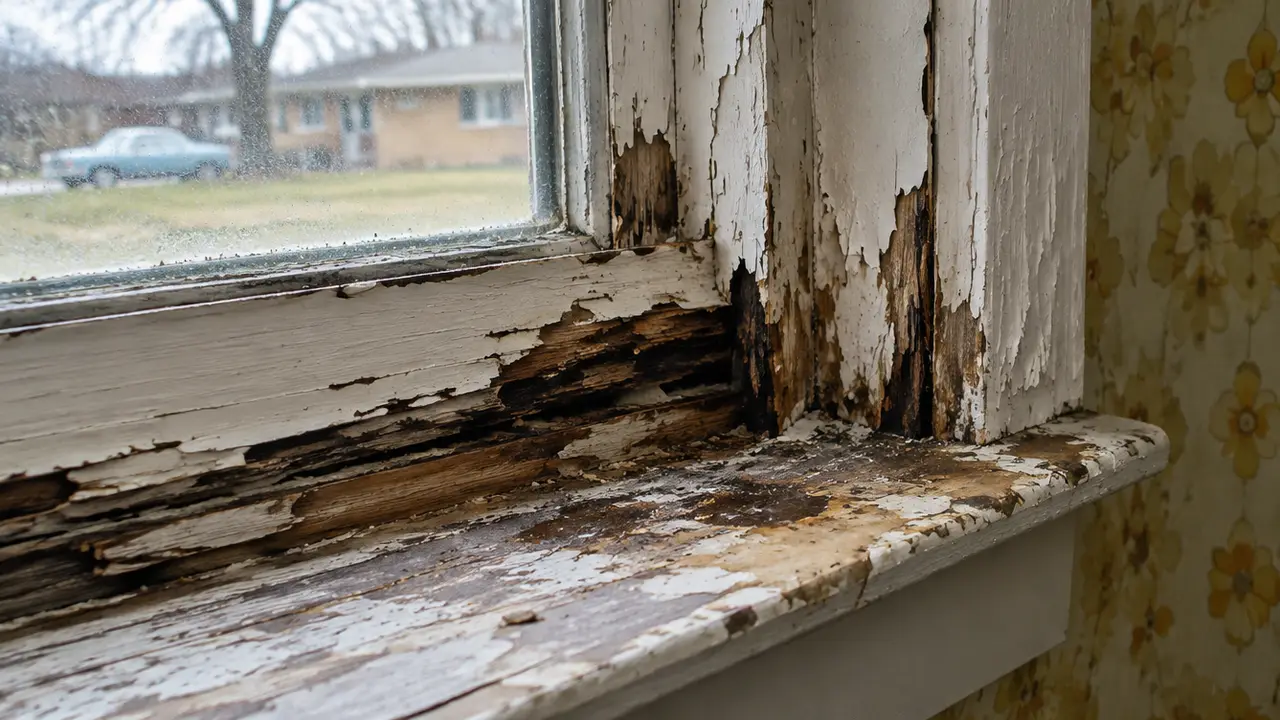
Solid wood windows are a good choice where appearance, heritage character or repairability matter most and you accept regular maintenance. Wood insulates well, can be milled into traditional profiles, and damaged sections can often be repaired by a skilled carpenter rather than replaced. Its enemy is water: exterior finishes must be kept intact, and sills and the bottom rails of sashes are where rot starts.
- Maintenance: exterior paint or stain renewal on a regular cycle, with more frequent attention on south- and west-facing walls and on sills.
- Moisture: winter condensation running down interior glass soaks sills and bottom rails; controlling indoor humidity protects wood windows.
- Heritage: in older homes, restoring original wood sashes and adding storm windows can be an alternative to replacement; NRCan notes that inserts can be a good option for homes with heritage status when frames are sound.
- Planner: the planner does not list unclad wood. Use wood-clad as a rough stand-in and expect real quotes to vary widely.
04 /What is a clad wood window?
A clad wood window has a wood frame and sash with a protective exterior skin, so you get a wood interior without painting the outside. The cladding is commonly vinyl, extruded or roll-formed aluminum, or fibreglass. The planner distinguishes two versions: wood-clad (a wood core with an exterior cladding, ×1.6) and aluminum-clad wood (wood inside, metal outside, ×1.7).
Cladding protects wood only if water cannot get behind it. Look at how corners are joined and sealed, whether the cladding leaves a drainage path at the sill, and what the warranty says about the wood beneath. Ask whether the interior wood is pre-finished or needs finishing on site, and which species it is.
05 /What is a composite window frame?
Composite is a catch-all term for frames made from blended materials, such as PVC or other resins mixed with wood fibre, or resin reinforced with glass or mineral fibres. Composites aim to combine the rot resistance of plastic with more stiffness and less thermal movement than plain vinyl. Because the recipes vary, two 'composite' windows can behave very differently.
Ask the supplier what the frame is made of, whether the whole frame or only the exterior is composite, how it is finished, and what the frame warranty covers. The planner does not list composite; if your quote is for one, compare it against fibreglass and vinyl ranges and let the certified ratings and warranty guide you.
06 /Are aluminum windows a good idea in a cold climate?
Aluminum windows can work in Canadian homes only if the frame has a thermal break, a strip of low-conductivity material that separates the inside and outside parts of the frame. Aluminum conducts heat very quickly, so an unbroken aluminum frame runs close to the outdoor temperature in winter and collects condensation and frost. Thermally broken aluminum is common in condos, commercial buildings and modern houses that want very slim sightlines.
CMHC's older consumer fact sheet on window ratings used the CSA condensation index called the Temperature Factor and gave, as a reference point, that the minimum level in the standard was roughly equivalent to a double-glazed window with a thermally broken metal frame. In other words, thermally broken aluminum clears a basic bar, but other materials usually keep their frames warmer in deep cold. If you choose aluminum, compare certified U-factors and ask about condensation performance for your climate and indoor humidity.
The planner prices aluminum at ×1.1 against vinyl. Residential thermally broken systems vary widely in price, and very large or specialty aluminum systems can sit well above that planning range.
07 /Which frame materials handle sun, hail, salt air and humidity?
Exposure should shape the choice as much as budget. The same window can age very differently on a sheltered north wall and on a south-facing wall above a reflective roof. Match the material to the harshest condition the window will face.
| Exposure | Holds up well | Needs more care |
|---|---|---|
| Strong sun, south or west walls | Fibreglass, aluminum-clad wood, light-coloured vinyl | Dark vinyl, unfinished or neglected wood |
| Hail-prone areas such as parts of Alberta | Fibreglass, vinyl (flexible), solid wood | Thin aluminum cladding and capping, which can dent |
| Coastal salt air | Vinyl, fibreglass, well-finished aluminum | Poorly finished metal and exposed fasteners |
| High indoor humidity in winter | Vinyl, fibreglass, clad wood with warm-edge glass | Unbroken aluminum; wood sills without upkeep |
| Very large openings | Fibreglass, aluminum-clad wood, thermally broken aluminum | Unreinforced vinyl |
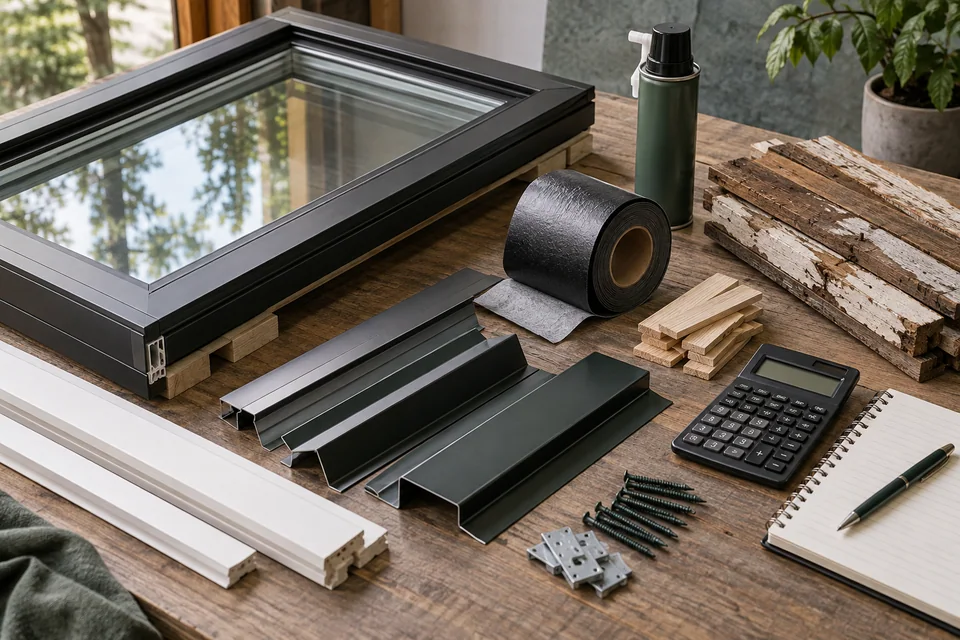
Exterior trim matters too. Many replacements finish the outside with aluminum capping bent to cover the old frame and brickmould. Capping is a cladding, not a flashing, and it dents in hail; the water management behind it still has to be right. The installation, flashing and sealing guide explains the layers.
08 /How do you choose a frame material?
Choose a frame by working through five questions in order. The answers usually narrow seven materials to two.
- How much maintenance will you accept?
If the answer is almost none, drop solid wood and consider vinyl, fibreglass, composite or clad wood.
- How exposed and how large are the windows?
Tall walls, big units, dark colours and harsh sun favour stiff, stable frames such as fibreglass, aluminum-clad wood or thermally broken aluminum.
- What should the inside look like?
If you want wood inside, you are choosing between solid wood, wood-clad and aluminum-clad wood, or laminated finishes on vinyl.
- What does the building allow?
Condo boards, heritage districts and some neighbourhood rules may control exterior colour, profile or material.
- What is the budget?
Run the same window list through the Window Replacement Planner with two frames and compare the totals.
Once the shortlist is clear, the window types guide covers how each window opens, and ENERGY STAR window ratings explained shows how to compare the certified performance of products built from different materials. You can request quotes for two frame options at once and compare them in the Window Quote Checker. The rest of the buying decision, from ratings to warranties, is covered in how to choose replacement windows.
FAQQuestions people ask
What is the best window frame material?
There is no single best. Vinyl is the best value for most standard windows, fibreglass for large, dark or slim units, clad wood for a wood interior with a low-maintenance exterior, and thermally broken aluminum for very slim modern frames. The certified whole-window rating matters more than the material.
Is vinyl better than wood for windows?
Vinyl costs less and needs almost no maintenance, while wood looks warmer, suits heritage homes and can be repaired. Wood needs regular exterior finishing. Clad wood is a middle path: wood inside, a protective skin outside.
Is vinyl better than aluminum for windows?
In cold climates, generally yes for comfort and condensation, because vinyl conducts far less heat. Thermally broken aluminum closes some of the gap and offers slimmer frames, but usually at a higher price.
What does aluminum-clad mean?
The window is wood on the inside with an aluminum skin on the outside that protects the wood from weather. The planner prices it at 1.7 times vinyl.
Can vinyl windows look like wood?
Many vinyl lines offer woodgrain laminates or interior finishes that imitate wood. Up close the texture is usually recognisable. Clad wood gives real wood inside if that matters to you.