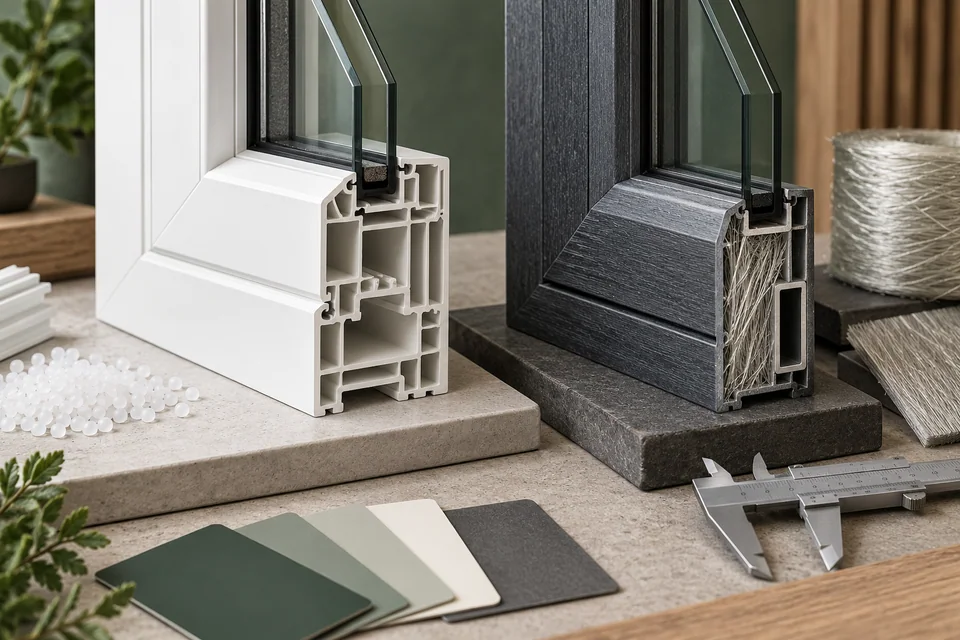
Fibreglass frames are stiffer and move much less with temperature than vinyl, so they suit large windows, dark colours and narrow profiles, and they can be painted. Vinyl costs less and insulates comparably. In the Window Replacement Planner fibreglass is priced at 1.3 times vinyl. Choose fibreglass when size, colour or rigidity matters; choose good vinyl when budget leads.
- Fibreglass is made by pulling glass fibres through resin (pultrusion), giving a stiff frame that expands at a rate close to glass.
- Vinyl and fibreglass frames insulate comparably; the glass package and installation decide more of the difference.
- Fibreglass handles dark colours and large units better and can be repainted; check the finish warranty first.
- The planner prices fibreglass at 1.3 times vinyl for the same window, type, size and glazing.
- Fibreglass is less common mainly because it costs more and fewer manufacturers make it, not because it performs poorly.
01 /How are fibreglass and vinyl windows different?
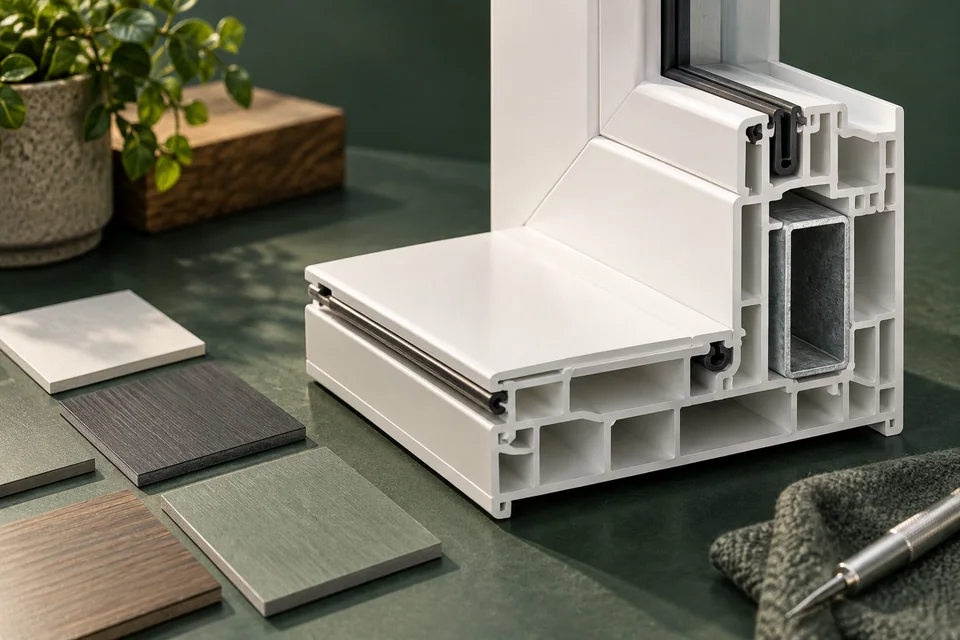
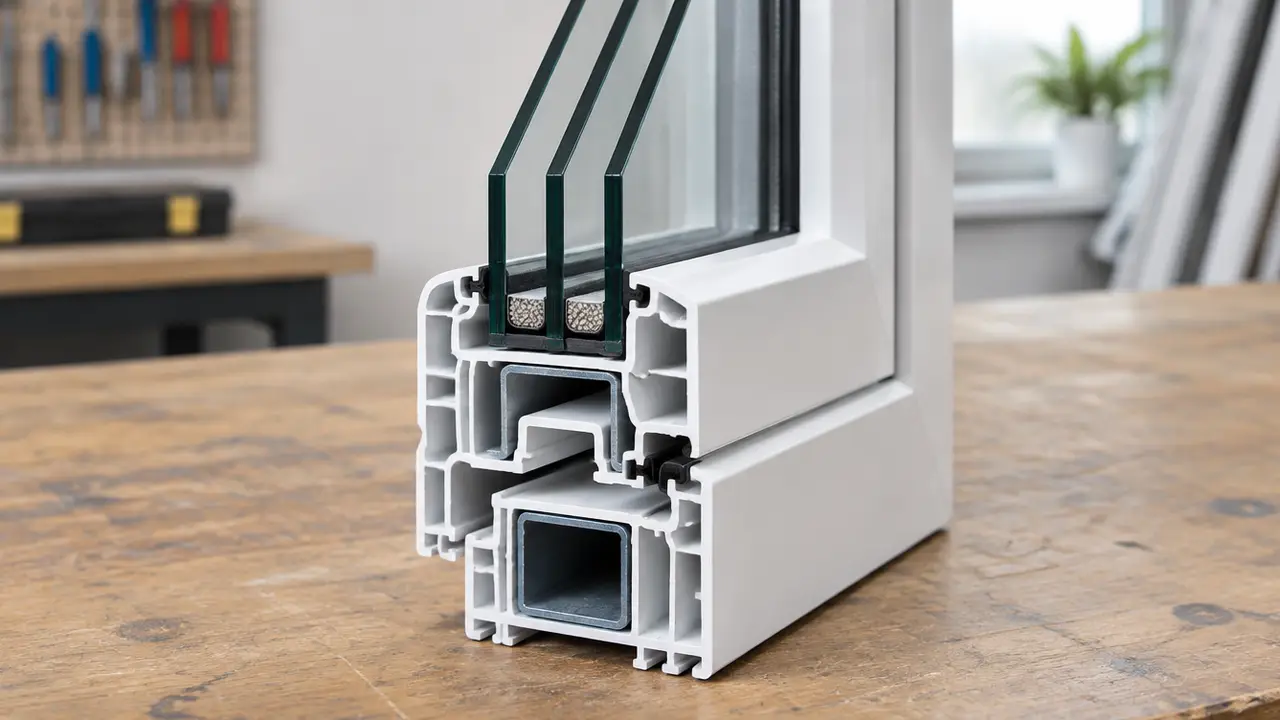
The difference is in how the frame is made. Vinyl frames are extruded from rigid PVC into hollow, multi-chamber profiles and heat-welded at the corners. Fibreglass frames are made by pultrusion: continuous glass fibres are pulled through a bath of resin and a heated die, producing hollow profiles that are much stiffer than PVC. Fibreglass corners are usually mechanically joined and sealed rather than welded, and the frames are finished with a factory coating.
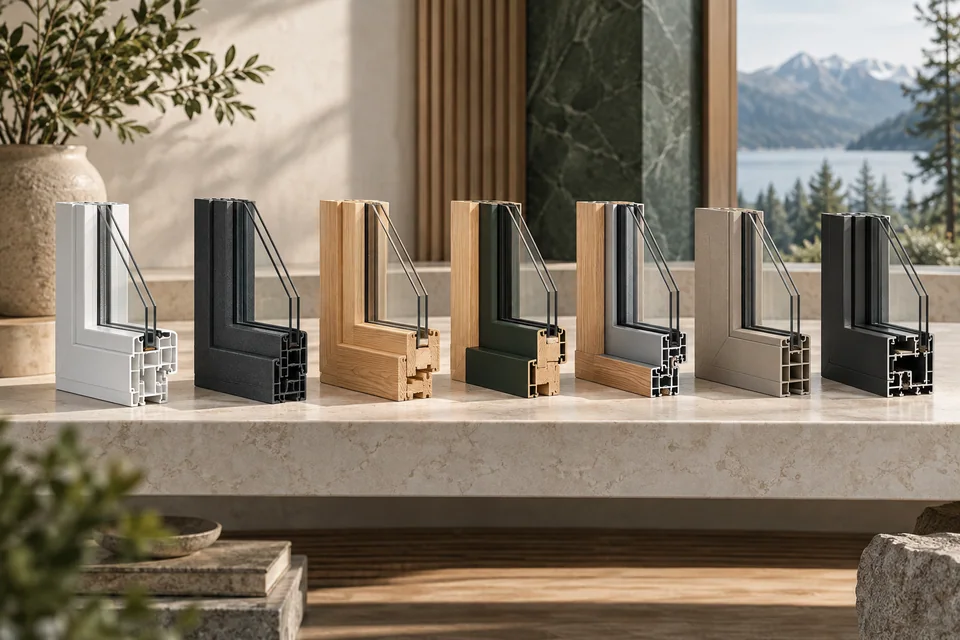
Some products blend the two ideas: vinyl frames with fibreglass reinforcement inside, fibreglass exteriors over wood interiors, or composite profiles made from resin and wood or mineral fibre. If a quote says 'fibreglass', ask whether the whole frame and sash are pultruded fibreglass or only part of them.
02 /Which is stronger and more stable?
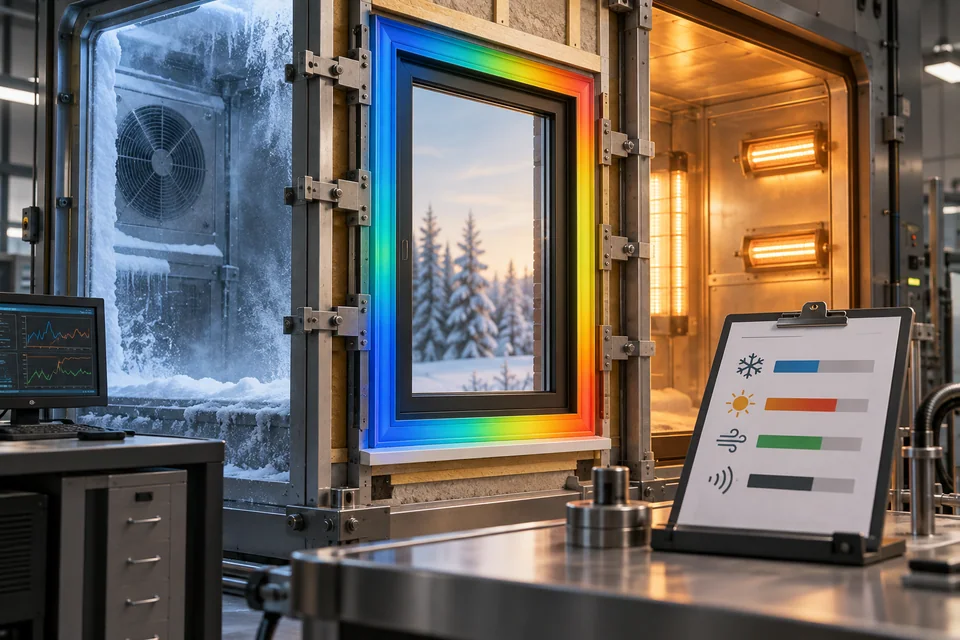
Fibreglass is considerably stiffer than vinyl and expands and contracts at a rate much closer to glass. That matters in three situations: large windows and patio doors where long frame members must stay straight, dark exterior colours that heat up in the sun, and climates with big temperature swings, where the seal between glass and frame is stressed each time the frame moves differently from the glass.
| Factor | Fibreglass | Vinyl |
|---|---|---|
| Stiffness | High; slim profiles possible | Lower; relies on chambers and reinforcement |
| Thermal movement | Low, close to glass | Higher; needs room to move |
| Frame insulation | Good, often foam-filled | Good, multi-chamber |
| Dark colours | Well suited | Possible on warranted lines; more heat stress |
| Painting later | Yes, with suitable paint | Possible with vinyl-safe paint; may affect warranty |
| Large units | Strong fit | Needs reinforcement; size limits apply |
| Planner multiplier | ×1.3 | ×1.0 (baseline) |
| Availability | Fewer manufacturers | Very widely made |
Stiffness also helps a window stay square during installation, which reduces the risk of binding sashes and misaligned locks. It does not make a poor installation acceptable: fibreglass still needs proper shimming, sill support, flashing and air sealing.
03 /Do fibreglass windows insulate better than vinyl?
Not by much, and sometimes not at all. Both materials are poor conductors of heat, and both can be made with insulated chambers. Because the glass makes up most of a window's area, the whole-window U-factor depends mainly on the glass package, the spacer and the airtightness of the sash. Two windows with the same glass will often land close together whether the frame is fibreglass or vinyl.
Where fibreglass can pull ahead is indirect. Its slimmer frames can leave more glass area for daylight, and its stability helps glass seals and weatherstrip stay tight over many seasons. Compare the certified whole-window ratings for the exact products, not claims about frame materials; the ENERGY STAR window ratings guide explains how to read them.
04 /Can fibreglass windows be painted, and do they fade?
Yes, fibreglass windows can be painted, which is one of their practical advantages over vinyl when you want to change colour later. Clean and prepare the surface, use a paint suitable for the factory finish, and check the manufacturer's instructions first, because painting over a factory finish may affect the finish warranty. Many fibreglass lines come in a range of factory colours, often with a different colour inside and out.
Like any exterior finish, fibreglass coatings weather over time. Strong sun, particularly on south- and west-facing walls, can dull or chalk darker colours. The finish warranty tells you what the manufacturer considers normal; ask whether it covers fading, chalking and peeling and for how long.
05 /Do fibreglass windows need maintenance or have weep holes?
Fibreglass windows need little maintenance: occasional washing, keeping tracks and drainage paths clear, checking weatherstrip, lubricating hardware and, eventually, refreshing the paint finish. Like other operable windows, most fibreglass windows have drainage paths and weep holes in the sill that let water that gets into the frame drain back outside. Keep them clear and never seal them shut with caulking.
- Wash frames with mild soap and water; avoid abrasives that cut through the finish.
- Vacuum sill channels and confirm the weeps drain.
- Lubricate operators and locks with the lubricant the manufacturer recommends.
- Check the exterior sealant joint every year or two.
06 /How much more do fibreglass windows cost?
In the site's Window Replacement Planner, fibreglass multiplies each unit's planning range by 1.3 compared with vinyl. For a medium casement installed as an insert with double low-e argon glass, that moves the planning range from $900 to $1,500 to about $1,170 to $1,950. With triple glazing as well (×1.15), it is about $1,346 to $2,243.
| Frame and glazing | Planning range per window |
|---|---|
| Vinyl, double low-e argon | $900 to $1,500 |
| Vinyl, triple | about $1,035 to $1,725 |
| Fibreglass, double low-e argon | about $1,170 to $1,950 |
| Fibreglass, triple | about $1,346 to $2,243 |
On a whole house the gap adds up. A ten-window mix that plans at about $9,900 to $18,860 in vinyl with double glazing plans at about $14,800 to $28,200 in fibreglass with triple glazing, before any full-frame or stucco allowances. The window replacement cost guide walks through the arithmetic.
07 /How long do fibreglass and vinyl windows last?
Neither material has a fixed lifespan, and claims of a specific number of years should be read as marketing unless they are backed by a written warranty. What usually ends a window's useful life is not the frame but the parts attached to it: the insulating glass seal, the hardware, the weatherstrip and the installation around it. A stable frame helps those parts last, which is the real argument for fibreglass in harsh exposures.
Use the warranty as the manufacturer's own forecast. Compare, in writing, how long each product's frame, glass seal, hardware and finish are covered, whether labour is included, whether coverage is pro-rated, and whether it transfers to the next owner. A shorter glass seal warranty on a cheaper vinyl line, or a finish warranty that excludes fading on a dark fibreglass colour, tells you more than a brochure's claim. The window quotes and warranties guide lists what to check.
08 /Why are fibreglass windows less common?
Fibreglass windows are less common mainly because they cost more and fewer manufacturers produce them. Pultrusion equipment and finishing lines are a bigger investment than vinyl extrusion, so there are fewer local fabricators, and some shapes and window types are available in a narrower range. Shorter supply chains also mean longer lead times in some regions.
That is a market observation, not a performance verdict. Plenty of homeowners who choose vinyl are well served, and fibreglass is not automatically the better product. It earns its premium in specific situations.
09 /Which should you choose?
| Your situation | Leans toward | Why |
|---|---|---|
| Budget is the main constraint | Vinyl | Lower planning range for the same glass |
| Dark exterior colour | Fibreglass | Low thermal movement and repaintable finish |
| Large picture windows or patio doors | Fibreglass | Stiffness keeps long members straight |
| You want narrow frames and more glass | Fibreglass | Slimmer profiles are possible |
| Standard sizes in white or light colours | Vinyl | Performance is comparable at lower cost |
| You may repaint in future | Fibreglass | Designed to take paint; check the warranty |
| Condo or rental where upfront cost dominates | Vinyl | Lower cost, low maintenance |
Many households mix: fibreglass for a large living-room window and patio door, vinyl for bedrooms and the basement. If you are still comparing, read vinyl windows pros and cons and the window frame materials guide, then run both options through the planner. When you have quotes, the Window Quote Checker compares them on price per window, warranty and inclusions, or you can request quotes.
FAQQuestions people ask
Are fibreglass windows worth it?
They are worth it when you need stiffness, dark colours, large units or slim frames, or you want to repaint later. For standard sizes in light colours, a good vinyl window often performs similarly for less. The planner prices fibreglass at 1.3 times vinyl.
Do fibreglass windows expand and contract?
Very little. Fibreglass expands at a rate close to glass, which is why it holds up well with dark colours and large sizes and puts less stress on the glass seal as temperatures swing.
Can fibreglass windows break?
The frames are strong but can crack from a hard impact, and the glass in any window can break. Damaged fibreglass is usually repaired by replacing the affected sash or part rather than patching.
Do fibreglass windows need to be painted?
No. They come with a factory finish, often in several colours. They can be painted later if you want a different colour, but check the finish warranty and use a suitable paint.
Is fibreglass better than aluminum for windows?
For most homes in cold climates, yes, because fibreglass conducts much less heat than aluminum, so frames stay warmer and resist condensation. Thermally broken aluminum narrows the gap and has its own uses, such as very slim modern frames.
Why are fibreglass windows not more popular?
Mainly cost and supply. They take more expensive equipment to make, fewer manufacturers produce them, and some shapes and types have a narrower range. Their performance is not the reason.