Triple-pane windows add a third sheet of glass and a second gas space, which lowers heat loss, keeps the room-side glass warmer and cuts condensation risk. They cost more, weigh more and admit a little less sunlight. In most of Canada they are worth considering for north- and east-facing rooms and colder regions; the certified U-factor and Energy Rating of the whole window matter more than the pane count.
- Compare whole-window ratings (U-factor and Energy Rating), not the number of panes; a well-built double-glazed unit can beat a poorly built triple.
- Triple glazing keeps the inside pane warmer, which reduces condensation, but it does not fix high indoor humidity.
- A third pane lowers solar heat gain and visible light slightly, so orientation matters.
- In the Window Replacement Planner, triple glazing multiplies each unit's planning range by 1.15.
- Noise reduction depends more on laminated glass, unequal pane thicknesses and airtight installation than on the third pane alone.
01 /What is the difference between double-pane and triple-pane windows?
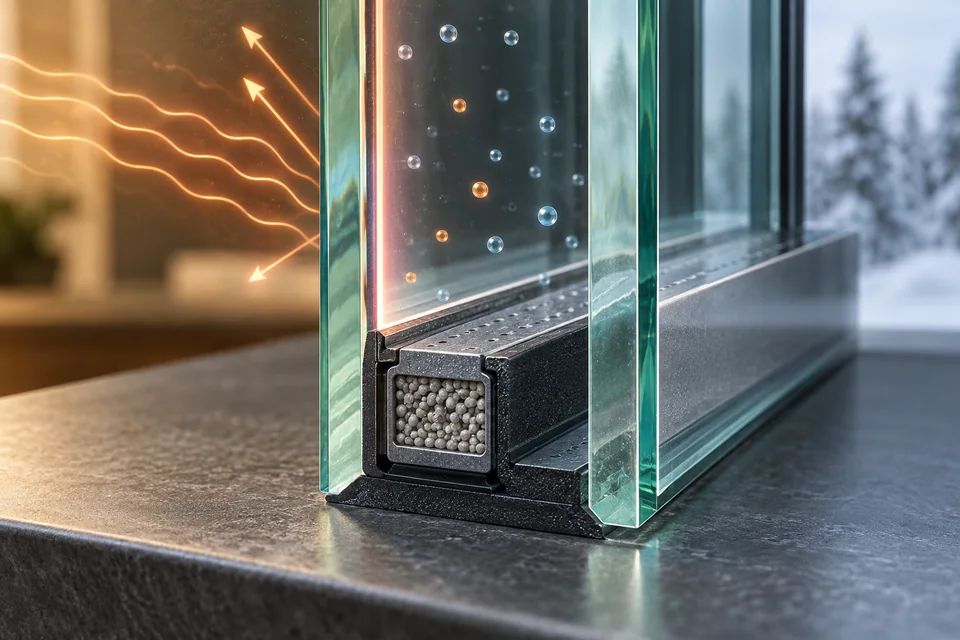
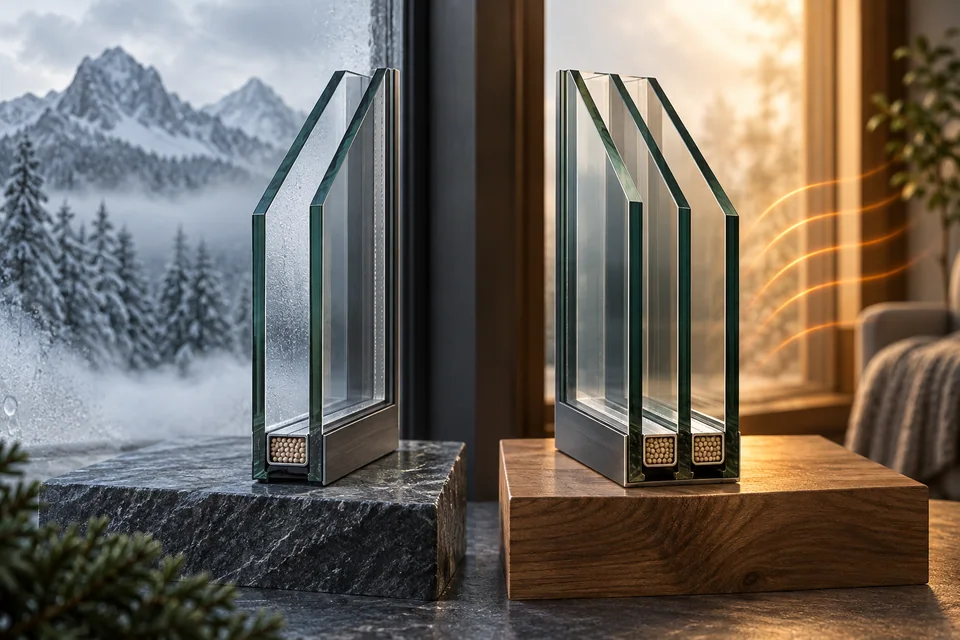
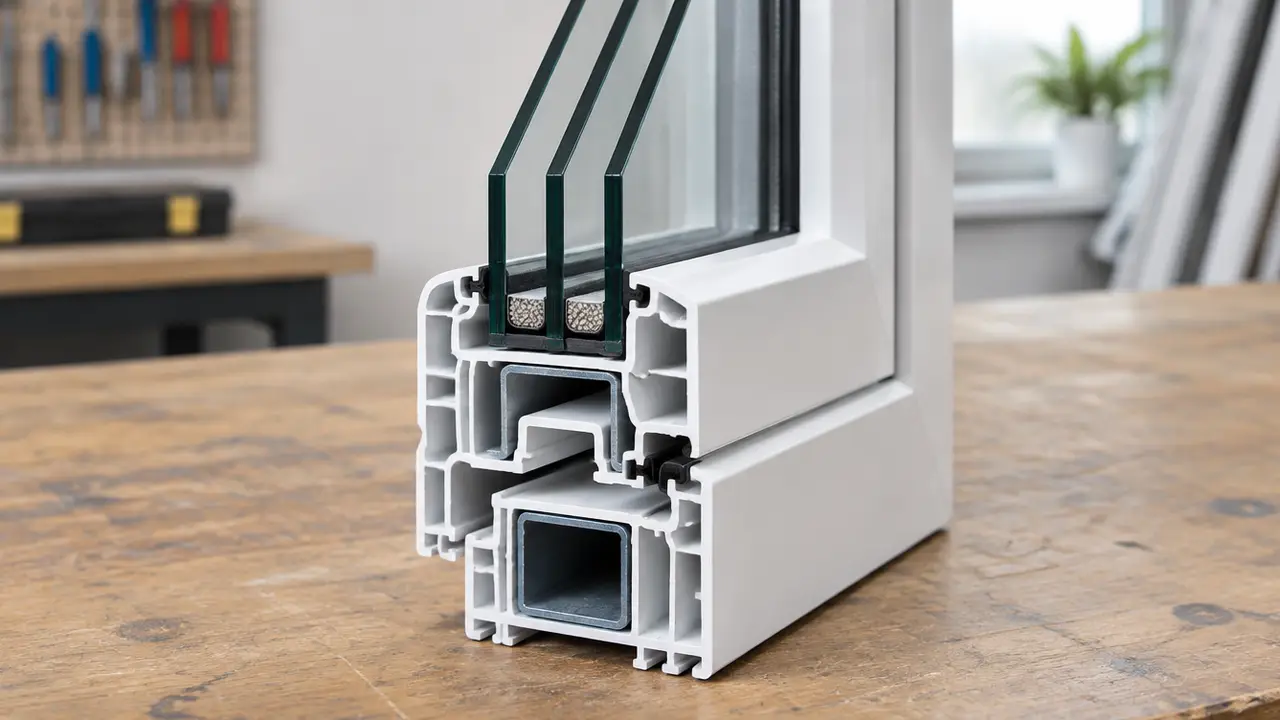
A double-pane window has an insulating glass unit (IGU) made of two sheets of glass separated by a spacer, with one sealed gap between them. A triple-pane window adds a third sheet and a second sealed gap. Each gap is usually filled with an inert gas such as argon or krypton, and one or more glass surfaces carry a low-emissivity (low-e) coating that reflects long-wave heat back toward its source.
Glass surfaces are numbered from the outside in. A double unit has surfaces 1 to 4; a triple unit has surfaces 1 to 6. Where the low-e coatings sit changes how much solar heat gets through, which is why two triple-pane windows with the same pane count can perform quite differently. The spacer at the edge, the seal around it and the frame that holds it all determine the rest.
Natural Resources Canada (NRCan) describes energy-efficient windows as combining several of these features at once: double, triple or even quadruple glazing, low-e glass, inert gas fill, low-conductivity or warm-edge spacers, insulated frames and sashes, and good airtightness. The third pane is one lever among several, not a performance level on its own.
02 /How much better does a triple-pane window insulate?
A triple-pane window typically has a noticeably lower U-factor than a comparable double-pane window, because the second gas space and the extra coated surface slow conductive and radiant heat flow. The only reliable way to know the difference for a specific product is to compare the certified whole-window ratings on the label or in the manufacturer's documentation.
For context, the current ENERGY STAR Canada specification for windows and doors (version 5.0, in effect since January 1, 2020) requires either a U-factor of 1.22 W/m²·K (0.21 Btu/h·ft²·°F) or lower, or an Energy Rating (ER) of 34 or higher, plus air leakage of 1.5 L/s/m² or less. That is a demanding bar for a whole window: many double-glazed products do not reach it, and many certified products are triple-glazed. NRCan's ENERGY STAR Most Efficient criteria for 2025 went further, at a U-factor of 1.05 W/m²·K or lower or an ER of 40 or higher. Specifications change, so check the current levels on NRCan's pages before you shop.
| Property | Effect of adding a third pane | Why it matters |
|---|---|---|
| U-factor (heat loss) | Lower (better) | Less heat escapes; warmer glass near you in winter |
| Room-side glass temperature | Higher in winter | Less condensation and less cold radiating toward you |
| Solar heat gain coefficient (SHGC) | Usually lower | Less free winter sun heat, but less summer overheating |
| Visible transmittance (VT) | Slightly lower | A little less daylight; tint can be more noticeable |
| Weight | Higher | Sashes, hinges and balances must be designed for it |
| Unit thickness | Greater | Needs a frame with a deeper glazing pocket |
| Planning price | About 15 percent higher in the planner | The planner applies a ×1.15 glazing multiplier |
If you like to think in R-values, whole-window R is roughly the inverse of the imperial U-factor. A window right at the ENERGY STAR limit of 0.21 Btu/h·ft²·°F works out to about R-4.7 overall, and one at the 2025 Most Efficient level of about 0.18 is about R-5.4. A well-insulated wall is several times higher, which is why windows remain the weakest part of the enclosure even when they are very good. NRCan's retrofit guidance notes that a single-glazed window loses about 10 to 20 times as much heat as the same area of properly insulated wall.
03 /Do triple-pane windows reduce condensation?
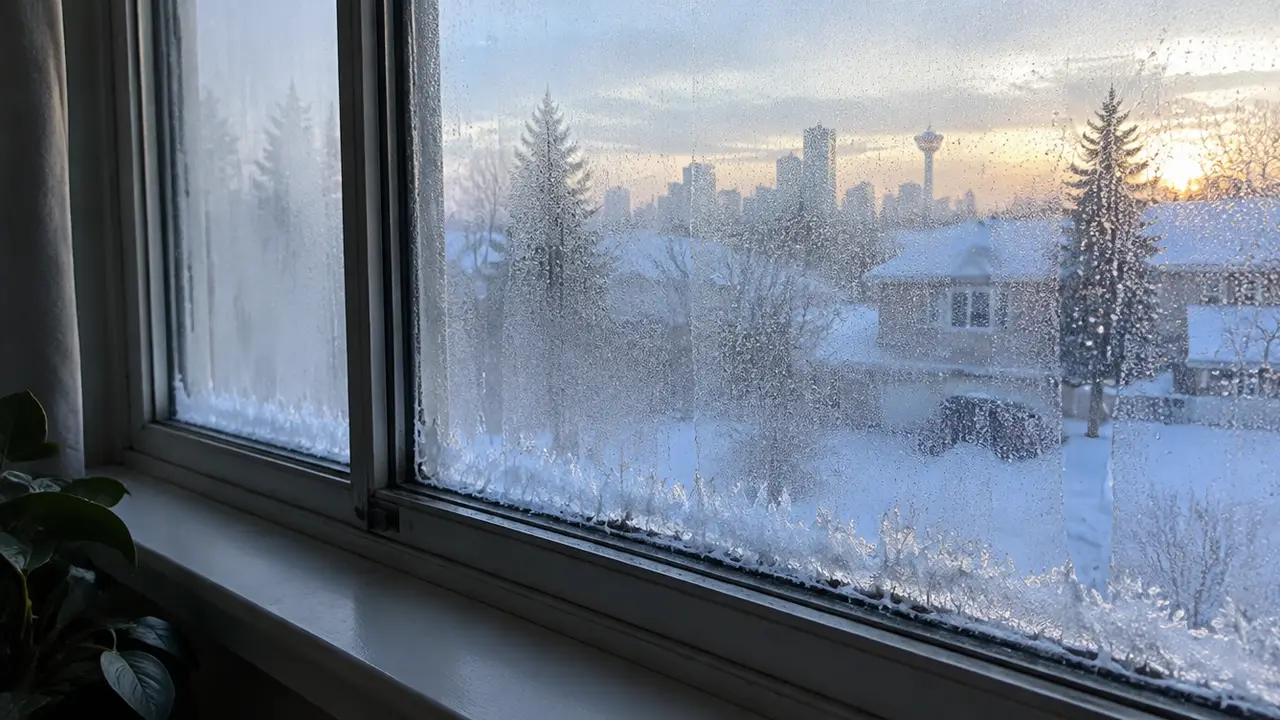
Yes, triple glazing usually reduces condensation on the room side of the glass, because the inner pane stays closer to room temperature. Condensation forms when moist indoor air touches a surface colder than its dew point, so a warmer pane gives you more margin before water or frost appears. The bottom edge of the glass, next to the spacer, is usually the coldest spot and the first to fog; a warm-edge spacer helps there.
Two cautions keep expectations realistic. First, humidity still rules: a house with very high indoor humidity will still see condensation on excellent windows during a deep cold snap. NRCan's retrofit guide notes that some homeowners find condensation gets worse after replacement, because the old, leaky windows were helping to dry the house out; the fix is to lower indoor humidity, not to blame the new glass. Second, fog between the panes is a different problem entirely. It means the seal on that glass unit has failed and moist air has got inside. The window condensation guide sorts out all three cases, with humidity targets for cold weather.
04 /Are triple-pane windows more soundproof?
Triple-pane windows can reduce outside noise, and NRCan lists better exterior noise reduction as one of the benefits of triple glazing, but the third pane is not the most important acoustic feature. Sound passes through glass by vibrating it, so what helps most is mass, different pane thicknesses that do not resonate at the same frequency, a laminated pane with a damping interlayer, and above all an airtight window and installation. A small air leak around the frame lets through more noise than the glass does.
- Laminated glass: a plastic interlayer bonded between two sheets damps vibration; it is also a safety and security feature.
- Asymmetric glazing: using panes of different thickness so they do not resonate together.
- Operating type: casement and awning windows that compress against their weatherstrip generally seal tighter than sliders.
- Installation: a continuous air seal between the frame and the rough opening, completed on the interior side.
If traffic, rail or aircraft noise is the main reason you are replacing windows, ask for an acoustic option on the specific product and for any tested sound ratings the manufacturer can provide, rather than assuming triple glazing solves it. The noise-reducing windows guide explains what National Research Council testing found about air space, pane thickness and laminated glass.
05 /How much more does triple glazing cost?
In the site's Window Replacement Planner, choosing triple glazing multiplies each unit's planning range by 1.15, which is roughly a 15 percent premium on the window portion of the job. For a medium vinyl casement installed as an insert, the base planning range is $900 to $1,500; with triple glazing it becomes about $1,035 to $1,725.
| Window mix | Double low-e argon | Triple |
|---|---|---|
| 6 medium casements | $5,400 to $9,000 | about $6,210 to $10,350 |
| 1 large picture window | about $878 to $1,620 | about $1,009 to $1,863 |
| 2 small basement windows | $1,120 to $2,240 | about $1,288 to $2,576 |
| 1 patio door | $2,500 to $6,000 | $2,875 to $6,900 |
| Total | about $9,900 to $18,860 | about $11,380 to $21,690 |
The premium varies more in real quotes than in the planner. Some product lines are designed around triple glazing and charge little extra for it; others treat it as an upgrade with a larger jump, particularly on big sliders and patio doors where the extra weight needs heavier hardware. See the window replacement cost guide for the full set of ranges.
06 /When is triple glazing worth it?
Triple glazing is most likely to be worth it when heat loss, comfort or condensation is a real problem and you plan to stay long enough to benefit. The decision is rarely all-or-nothing: you can mix glazing by elevation or by room.
| Situation | Leans toward | Reason |
|---|---|---|
| Long, cold winters (for example the Prairies, northern regions, much of Quebec and Ontario away from the lakes) | Triple | More heating hours to save and more condensation risk |
| North- and east-facing rooms | Triple | Little useful sun; NRCan suggests placing higher-insulation windows on these sides |
| Large glass areas or floor-to-ceiling windows | Triple | Comfort near cold glass and condensation control |
| Mild coastal climate | Double may be enough | Fewer heating degree-days; compare the certified ratings |
| South-facing glass where winter sun is welcome | Either, with high solar gain glass | Coating choice matters more than pane count |
| Heritage sashes or hardware that cannot carry more weight | Double | Weight and glazing-pocket depth |
| Tight budget with draughty walls and attic | Double, plus air sealing | Air leakage elsewhere may cost more than the third pane saves |
Climate data helps here. The site's climate zones page explains heating degree-days and how Canadian locations compare. A home in a place with 6,000 or more heating degree-days spends far more of the year with a big indoor-outdoor temperature difference than one in coastal British Columbia, and every hour of that difference is an hour when a lower U-factor is working.
Pick the glass by the room it serves, not by a single rule for the whole house.
07 /What should you ask a supplier about triple-pane windows?
Ask for numbers and specifics, because 'triple pane' on its own tells you little. A good supplier can answer every item below in writing.
- The certified whole-window U-factor and Energy Rating for each window type you are buying, and whether the model is ENERGY STAR certified in Canada.
- The solar heat gain coefficient and visible transmittance, especially for south- and west-facing windows.
- How many low-e coatings there are and on which surfaces.
- The gas fill (argon or krypton) and the spacer type.
- Whether the sash, hinges or balances are rated for the weight of triple glazing at your sizes.
- Whether a laminated or thicker pane is available if noise matters.
- The glass seal warranty, separate from the frame and hardware warranties.
When you have two or three offers, the Window Quote Checker puts them side by side and turns anything missing into a question. For how the glass package itself works, read low-e glass, gas fill and spacers; for what the ratings mean, read ENERGY STAR window ratings explained. When you are ready, you can request quotes through HAUSE Home.
FAQQuestions people ask
Are triple pane windows worth the extra cost?
Often, in colder parts of Canada and for north- and east-facing rooms, large glass areas or homes with condensation problems. In mild coastal climates or on south-facing glass meant to collect winter sun, a high-quality double-glazed window may be enough. Compare certified ratings and your planned time in the house.
How can I tell if a window is triple pane?
Hold a small light or flame near the glass and count the reflections: each pane has two surfaces, so a double unit shows four reflections and a triple unit shows six. A reflection with a different tint usually marks a low-e coated surface. The spacer width and any label on the spacer or frame can also tell you.
Do triple pane windows block UV rays?
Low-e coatings, not the number of panes, do most of the ultraviolet blocking, and most coated glass cuts a large share of it. No ordinary window glass stops fading completely, because visible light and heat also contribute. Laminated glass blocks more UV if fading is a concern.
Do triple pane windows keep heat out in summer?
They reduce heat conducted through the glass, and they usually have a lower solar heat gain coefficient than double glazing, which limits direct sun heat. For west-facing rooms that overheat, choose glass with a low SHGC and use exterior shading where possible.
What is the R-value of a triple pane window?
Divide 1 by the imperial U-factor. A window at the ENERGY STAR Canada limit of 0.21 Btu/h·ft²·°F is about R-4.7 overall; one at the 2025 Most Efficient level of about 0.18 is about R-5.4. Centre-of-glass numbers quoted in advertising are higher than whole-window numbers.
Can a triple pane window be resealed?
Not in a way that restores it. When a sealed unit fogs, the practical repair is to replace that glass unit; NRCan describes refurbishing failed sealed units as a temporary fix that does not bring back the original efficiency. The frame and sash can often stay.
SOURCESSources and further reading
- Natural Resources Canada — Windows, doors and skylights: ENERGY STAR Canada technical specification
- Natural Resources Canada — ENERGY STAR Most Efficient criteria for windows and sliding glass doors
- Natural Resources Canada — Key features and helpful tips: windows, doors and skylights
- Natural Resources Canada — Keeping the Heat In, Chapter 8: Upgrading windows and doors (PDF)