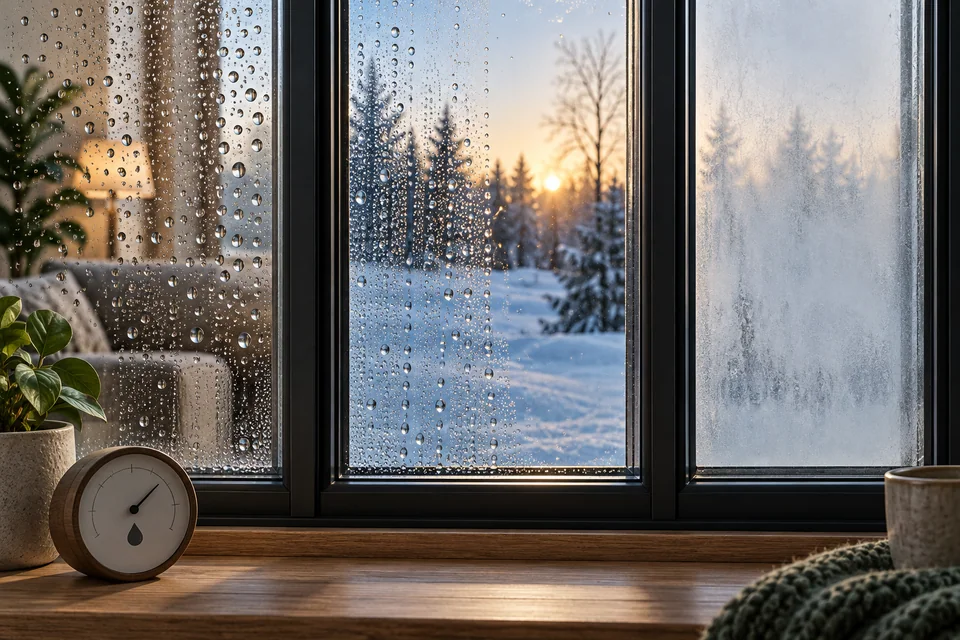
Water on the room side of a window means moist indoor air is meeting glass or frame colder than its dew point, so lower the humidity or warm the surface. Dew on the outside of efficient glass on a cool morning is normal. Fog trapped between the panes means the sealed unit has failed, and only a new glass unit fixes it.
- Where the water sits tells you the cause: room side points to humidity and surface temperature, outside is normal for efficient glass, and between the panes is a failed seal.
- Health Canada recommends keeping indoor relative humidity between 30 and 50 percent; in a deep cold snap, windows can sweat even inside that range.
- The bottom edge of the glass and the frame corners are the coldest spots, which is why warm-edge spacers and insulated frames help.
- Closed blinds, heavy drapes, deep sills and furniture that block warm air make condensation worse; Health Canada, NRCan and CMHC all say so.
- New windows warm the glass but also tighten the house, so ventilation has to keep up in the first winter.
01 /Why do windows get condensation in winter?
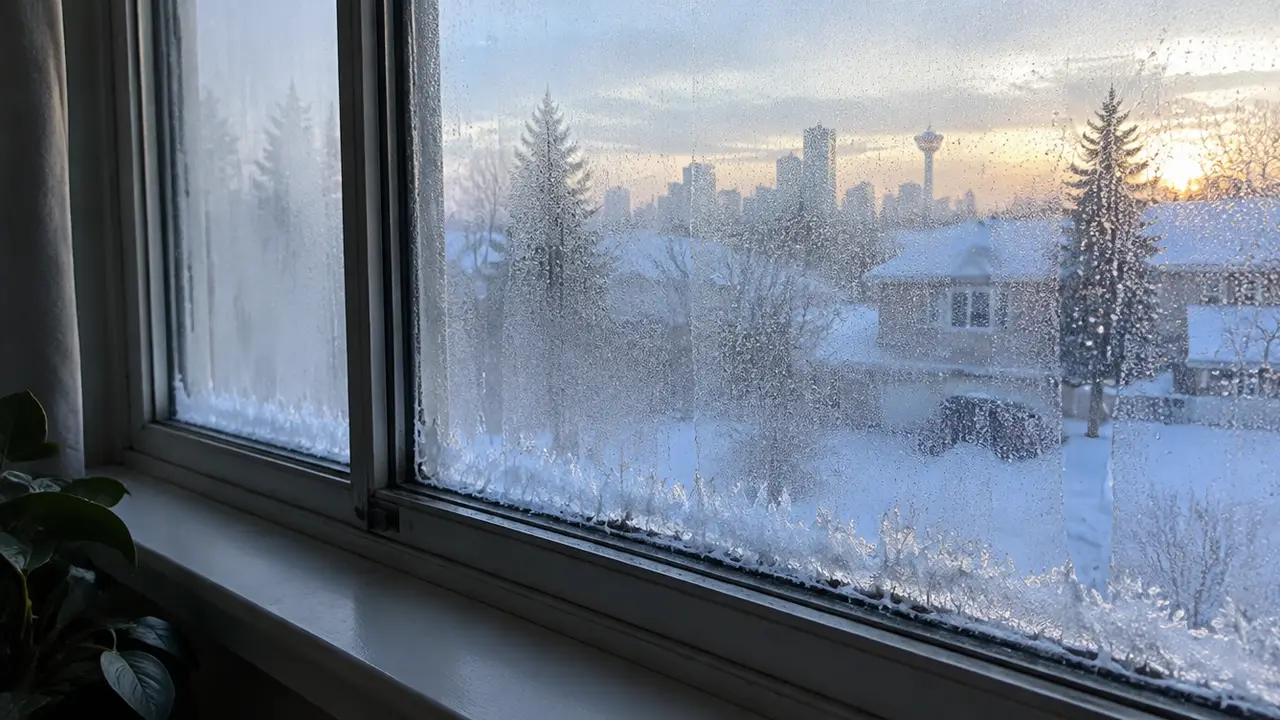
Condensation forms when warm, moist indoor air touches a surface colder than the air's dew point. Warm air can hold more water vapour than cold air, so as room air is chilled against the glass it reaches 100 percent relative humidity at that surface and the extra vapour turns to water, or to frost when the glass is below freezing. NRCan's Keeping the Heat In guide uses window condensation as its standard example of the process.
Windows show it first because they are usually the coldest large surface in a room. Two things move you toward the dew point: a colder surface, from falling outdoor temperatures, weaker glass, an aluminum spacer or blocked airflow, and wetter air, from showers, cooking, laundry, plants, a humidifier set too high or a house that has just been made tighter. Every fix works on one of those two levers.
| Where you see it | What it usually means | What to do |
|---|---|---|
| Room-side glass, starting at the bottom edge | Indoor humidity meeting the coldest part of the glass | Lower humidity, open coverings, improve ventilation; warm-edge spacers when replacing |
| Frost or ice along the sash edge or on hardware | A cold spot, often cold air leaking past worn weatherstrip | Check weatherstrip and lock adjustment; see repair options |
| Outside surface on a cool, clear morning | The outer pane of an efficient window has cooled to near outdoor temperature | Nothing; it clears as the sun and air warm the glass |
| Between the panes of a sealed unit | The edge seal has failed and moist air got inside | Replace the glass unit; check the glass seal warranty |
| Between a window and its storm window | House air leaking past the inner sash | Weatherstrip the inner sash; keep the storm's weep holes open |
| Water on the sill and stains on the wall below | Heavy condensation running off, or a leak from outside | Note whether it follows cold snaps or rainstorms; the cause decides the fix |
02 /What indoor humidity should you keep in winter?
Health Canada recommends keeping indoor relative humidity between 30 and 50 percent, measured with a hygrometer, which it describes as an inexpensive tool available at most hardware stores. Its moisture and mould guide adds that a portable dehumidifier is worth running if you see condensation on cold surfaces or humidity above 50 percent. NRCan's Keeping the Heat In guide gives a similar 30 to 50 percent range, lower in winter and higher in summer.
In a Canadian cold snap, even that range can be too high for some windows, because the edge of the glass keeps cooling as the outdoor temperature drops. NRCan notes that condensation on windows is itself a good indication of your humidity level, and that is the practical way to use it. If the bottom of the glass fogs every morning, bring humidity down in small steps until it stops, and hold it there through the coldest weeks rather than chasing a single number. Our sister portal CalgaryAtticRain.ca has a humidity target tool built for cold snaps.
- Bathrooms: run the exhaust fan while showering and, as Health Canada advises, for a few minutes after.
- Kitchen: use the range hood when cooking, especially when boiling water.
- Laundry: vent the dryer outdoors and avoid drying clothes on racks indoors in deep cold.
- Ventilation: NRCan's condensation guidance says to operate your heat recovery ventilator if you have one.
- Humidifiers: turn a furnace or room humidifier down, or off, when windows start to sweat.
03 /Why does condensation form at the bottom of the glass?
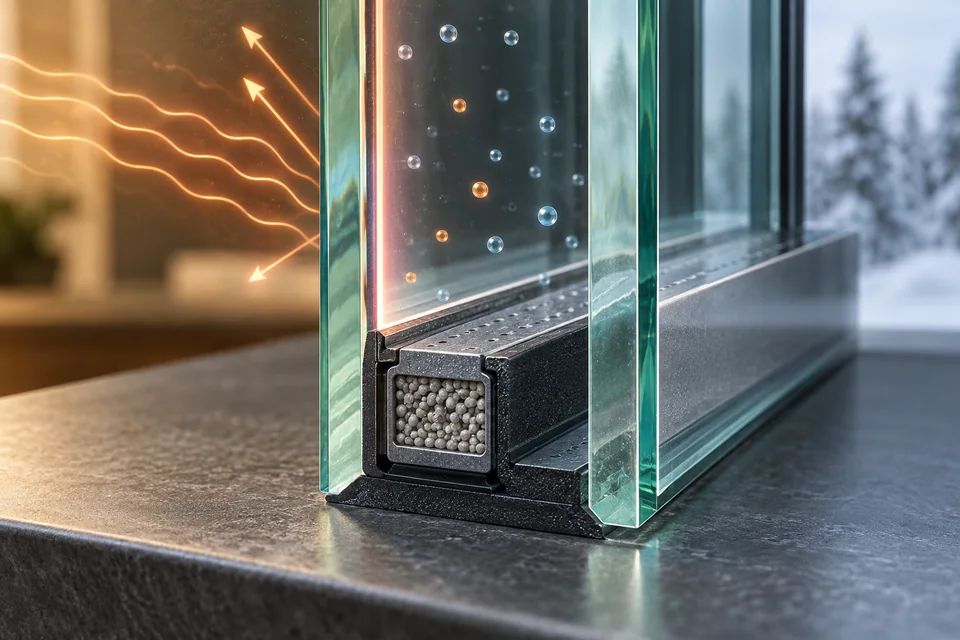
The bottom edge is usually the coldest part of a window. Heat escapes fastest where the spacer bridges the panes at the edge of the glass, and air cooled against the pane slides down and pools along the bottom. That is why a thin line of fog or frost often appears along the lower edge first, and why warm-edge spacers, insulated frames and multiple panes make the most difference there.
CMHC's fact sheet on window ratings lists the variables that decide whether a particular window sweats, and most of them are about the house rather than the product:
- Air leakage through the window and around its perimeter.
- Indoor relative humidity: the higher it is, the greater the potential for condensation.
- Where the window sits in the wall: CMHC notes that windows installed farther to the outside of the wall tend to show more condensation.
- Curtains, drapes or blinds that restrict air movement over the glass.
- Whether there is a heater below the window.
- Plants, photographs, books and other objects on the sill that block airflow.
Frame material matters too. Aluminum without a thermal break conducts heat quickly and often frosts along its inside face, while vinyl, fibreglass and wood stay warmer. The window frame materials guide compares them.
04 /Do blinds and curtains cause window condensation?
They can, by keeping warm room air away from the glass. Health Canada advises keeping window coverings open so warm air can reach the windows, warning that heavy curtains or blinds can trap the cold and moisture and cause condensation. NRCan's condensation guidance names deep window sills, closed drapes and blinds, and even nearby furniture as things that block the airflow a window needs.
NRCan's retrofit guide adds a nuance: insulated drapes save a little more heat than ordinary ones in winter, but because curtains and blinds are not airtight, they may still cause condensation problems. In practice, the fix is circulation. Leave coverings slightly open on the coldest nights, keep heating registers and baseboard heaters clear of furniture, and leave interior doors open where you can.
05 /Will new windows stop condensation?
New windows reduce room-side condensation when the old windows are the cold surface. NRCan's condensation page lists the features that help: triple glazing, low-e coatings, inert gas between the panes, thermally improved spacer bars, insulated frames and greater airtightness. Its retrofit guide adds that properly installed energy-efficient windows raise the temperature of the interior side of the window, reducing condensation.
The same guide warns that many homeowners buy new windows only to find the problem gets worse, because the old, leaky windows were helping to dry the house. A tighter house keeps more of the moisture from cooking, showers and breathing, so plan to manage humidity from the first winter; see the best time to replace windows for what to expect. Triple-pane vs double-pane windows explains how much extra margin a third pane buys.
Some products are tested for condensation resistance. CMHC's 2005 fact sheet explains CSA's index, the Temperature Factor: 0 means the window's inside surfaces are as cold as outdoors, 100 means they are as warm as the room. It gave TF 40 as the minimum for tested windows, roughly equal to a double-glazed window in a thermally broken metal frame, and suggested higher ratings near lakeshores, oceans and river valleys and in humid homes. CMHC also cautioned that where indoor humidity is high, fixing the humidity directly with a dehumidifier or exhaust fan may make more sense than buying condensation-resistant windows. Current product literature may present the test differently, so ask the supplier what their number means.
| Measure | What it changes | When it is the right fix |
|---|---|---|
| Run bath fans and the range hood; vent the dryer outside | Lowers humidity | Always the first step |
| Dehumidifier or heat recovery ventilator | Lowers humidity | Humidity above 50 percent, or a tight house with daily fogging |
| Open coverings; clear sills and heating registers | Warms the glass surface | Heavy drapes, closed blinds or deep, cluttered sills |
| Adjust locks; replace worn weatherstrip | Stops cold air at the sash edge | Frost or ice around the sash perimeter |
| New sealed glass unit with a warm-edge spacer | Warms the glass edge | Fogged units, or units with old aluminum spacers in sound sashes |
| Replace the window | Warms the whole window | Single glazing, uninsulated aluminum frames, rot or several failing parts |
06 /Can condensation between the panes be fixed?
Not by drying it. Fog between the panes of a sealed unit means the edge seal has failed, moist air has leaked in and the desiccant in the spacer can no longer absorb it. NRCan's retrofit guide says the problem is best corrected by replacing the glazing unit; refurbishing failed units is a temporary fix that does not restore the original efficiency. Check the glass seal warranty first, and see repair or replace windows for when a new unit in the old sash is enough.
Moisture between a window and a separate storm window is a different problem. NRCan explains that it happens when moist house air leaks past the inner pane and condenses on the colder outer one, that it can happen even in dry houses, and that it is common on second storeys, where the stack effect pushes more air outward. The fix is to weatherstrip the inner sash and make sure the storm window's weep holes are open to the outside.
07 /When is window condensation a sign of a bigger problem?
- Water runs onto the sill every day. Health Canada advises drying window frames and sills daily so water does not drip and cause mould; if you are doing that all winter, lower the humidity.
- Dark spots on frames, sills or caulking. Health Canada says a small amount of mould can be cleaned up using proper procedures and protective equipment; larger areas need more care.
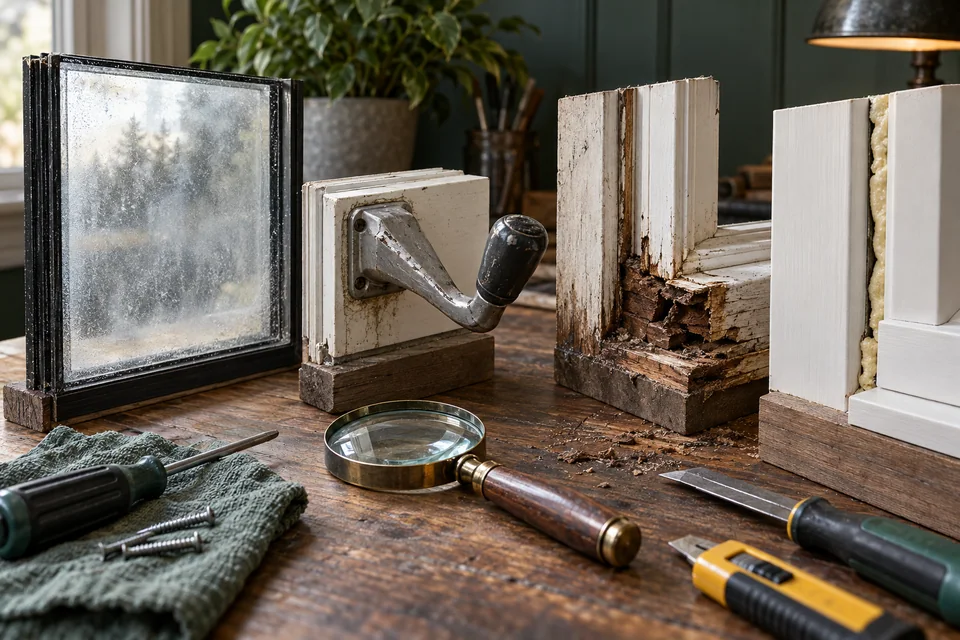
- Soft wood, peeling paint or swollen trim. Repeated condensation can rot wood sills and sashes, which pushes a window toward full-frame replacement.
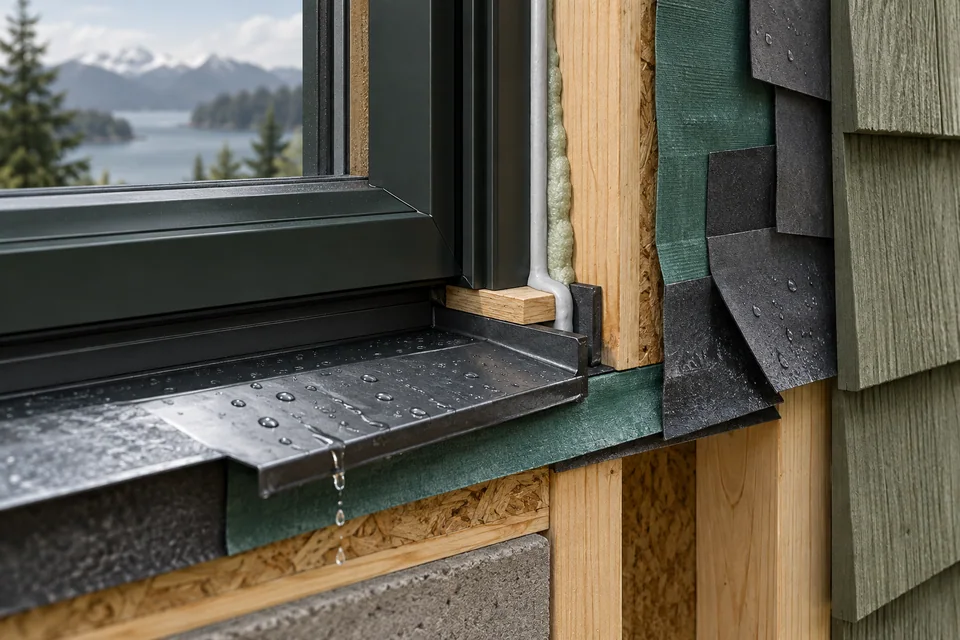
- Stains below the window after rain rather than cold weather. That points to a leak from outside, not condensation; read installation, flashing and sealing.
- Only one window sweats. Look for an air leak at that sash or a failing glass unit before blaming the whole house.
If condensation persists with humidity in range and coverings open, the windows themselves may be the cold surface. The Window Replacement Planner gives a planning range for the openings that need it, and you can request quotes that list the spacer and glass package for each window.
FAQQuestions people ask
Why are my new windows sweating on the inside?
Usually because the house is tighter and holds more moisture than before, not because the windows are defective. Run bath fans and the range hood, lower any humidifier, and open coverings at night. Persistent fogging with humidity under control deserves a call to the installer.
Should I worry about dew on the outside of my windows?
No. Dew on the outside of the glass on a cool, humid morning shows the outer pane is staying cold because little heat escapes. NRCan notes low-e coatings can make it more likely. It clears as the day warms.
What humidity level stops window condensation?
There is no single number, because it depends on the outdoor temperature and your windows. Health Canada recommends 30 to 50 percent. In a cold snap, lower it until the bottom of the glass stays clear, and use a hygrometer to track it.
Do triple pane windows get condensation?
They can, but less often than double glazing, because the inner pane stays warmer. In a very humid house during a deep cold snap, even triple glazing will fog along its bottom edge.
Why do triple glazed windows fog up between the panes?
Because a seal has failed on that glass unit and moist air has got into one of the gaps. It cannot be wiped away; the unit needs replacing, which is often a warranty claim.
Can window condensation cause mould?
Yes, if water sits on frames, sills and caulking day after day. Health Canada advises drying frames and sills daily, running a dehumidifier when you see condensation on cold surfaces, and cleaning small patches with proper protection.
SOURCESSources and further reading
- Natural Resources Canada — Condensation
- Health Canada — Guide to addressing moisture and mould indoors
- Health Canada — Mould (reduce humidity, moisture and mould)
- CMHC — About Your House: The ABC's of windows (2005, PDF)
- Natural Resources Canada — Keeping the Heat In, Chapter 8: Upgrading windows and doors (PDF)