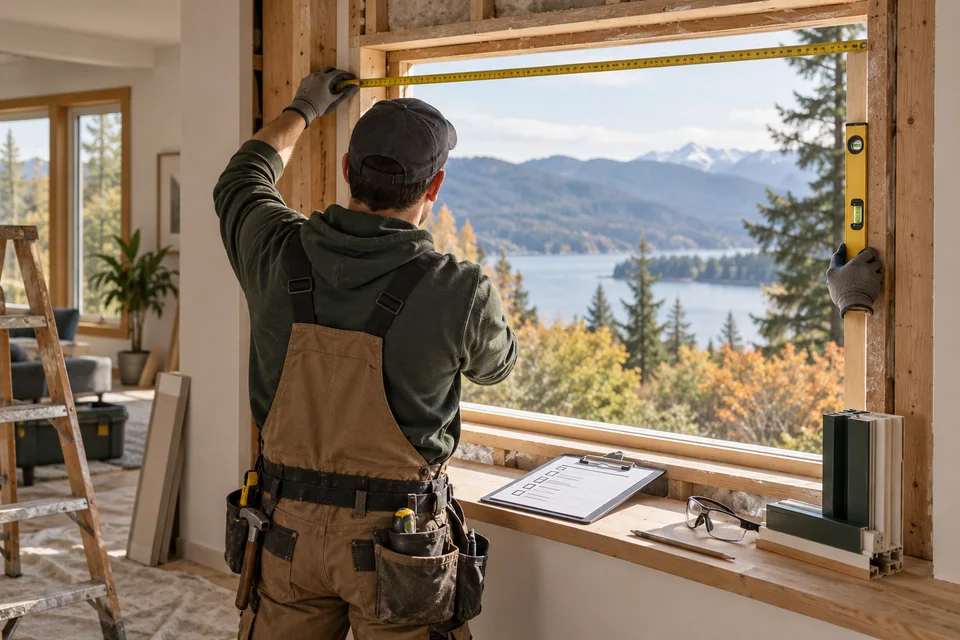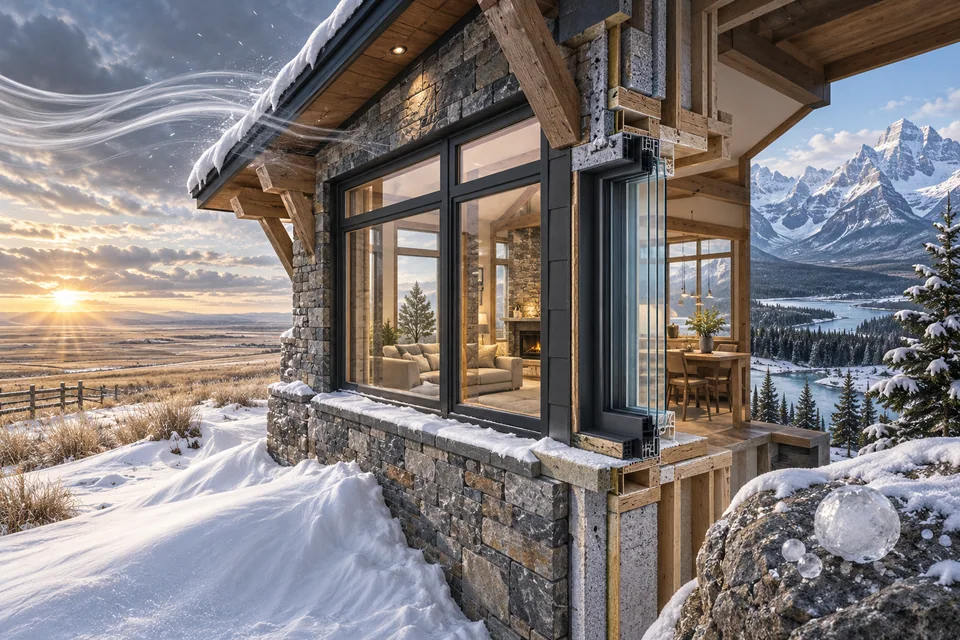
Alberta windows face long cold winters, sharp temperature swings, strong sun, wind and hail. Calgary and Edmonton both say a same-size replacement needs no building permit, while adding or enlarging windows does. Selling windows door-to-door without an invitation has been banned since 2017, and CEIP offers property-tax financing, not rebates, in participating municipalities. Costs follow the site's national planning ranges.
- Alberta's main cities sat between 4,500 and 5,550 heating degree-days in the old ENERGY STAR tables, so triple glazing is worth pricing, especially on north and east walls.
- Calgary exempts replacements that keep the opening size and the window's type or operation; Edmonton exempts windows of the same size. Both require permits to add or enlarge.
- Since January 1, 2017, Alberta has prohibited unsolicited door-to-door sales of windows, furnaces, water heaters, air conditioners and energy audits.
- CEIP windows must be ENERGY STAR certified to the latest version and replace a less efficient window; Edmonton and Leduc require triple or more panes.
- Hail is a real design load here: IBC puts the August 5, 2024 Calgary hailstorm at $3.25 billion in insured losses.
01 /What makes window replacement in Alberta different?
Alberta combines four stresses that most window buyers elsewhere face only one or two at a time: a long heating season, big and sudden temperature swings, strong sun on clear winter days, and summer storms that bring wind and hail. Each one points to a different part of the window: the glass package for cold, the frame and sealant joints for swings, the exterior finish for sun, and the capping, screens and glass for hail.
The old ENERGY STAR Canada tables are a handy way to compare the cold. Version 4.0 of the specification, replaced in 2020, listed heating degree-days for Canadian locations, a yearly total of how far and how long the daily mean temperature stays below 18 °C. The Alberta entries below come from that appendix; the climate zones page explains the measure and lists other provinces.
| Location | Heating degree-days | Old zone | Window priorities |
|---|---|---|---|
| Lethbridge | 4,500 | 2 | Wind resistance first (south of High River); strong sun on south and west glass |
| Calgary | 5,000 | 2 | Chinook swings, hail, low U-factor on north and east walls |
| Edmonton | 5,120 | 2 | Long cold season; triple glazing widely worth pricing |
| Red Deer | 5,550 | 2 | More heating degree-days than Calgary or Edmonton; condensation margin in humid rooms |
| Fort McMurray | 6,250 | 3 | Very cold; lowest affordable U-factor and robust frames |
02 /Which glass and frames suit Alberta's climate?
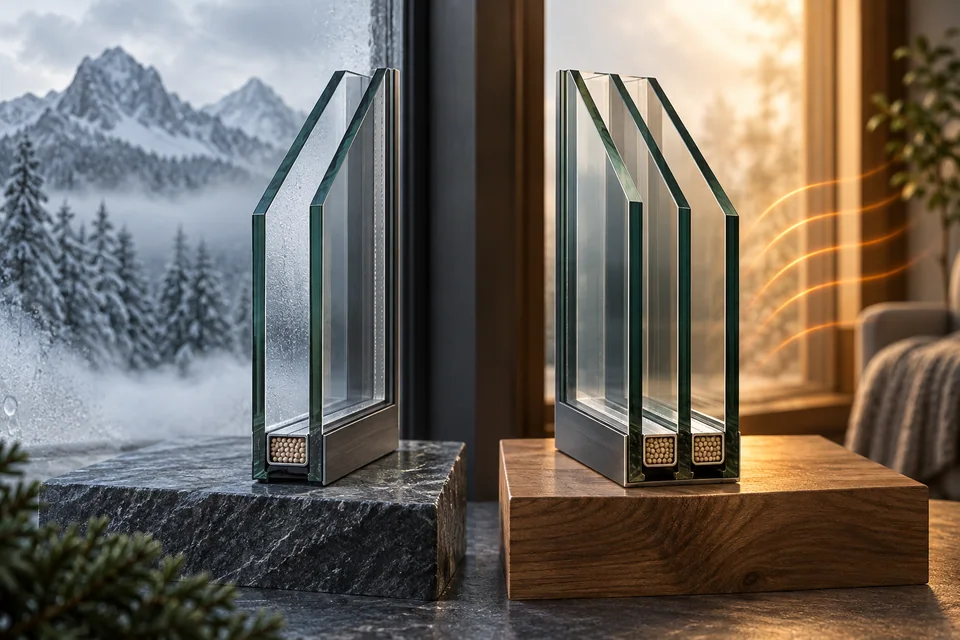
For cold, the current national ENERGY STAR level is already demanding: a U-factor of 1.22 W/m²·K or lower, or an Energy Rating of 34 or higher, roughly the old Zone 3 standard. In Alberta that level is a floor, not a target. Triple glazing earns its keep on north- and east-facing walls, in bedrooms with big windows and anywhere condensation has been a problem, while south-facing glass can use a higher solar heat gain coefficient to collect winter sun. Triple-pane vs double-pane windows walks through that decision.
Chinook winds in southern Alberta can turn a cold winter day mild in a short time, and a sunny south-facing wall can swing further still. Frames expand and contract with each change, and so do the sealant joints between frame and wall. Dark exterior colours on vinyl add heat stress, while fibreglass, which expands at a rate close to glass, copes with them better; see fibreglass vs vinyl windows. Ask installers which sealant and joint design they use to allow for movement, rather than assuming any caulk will do.
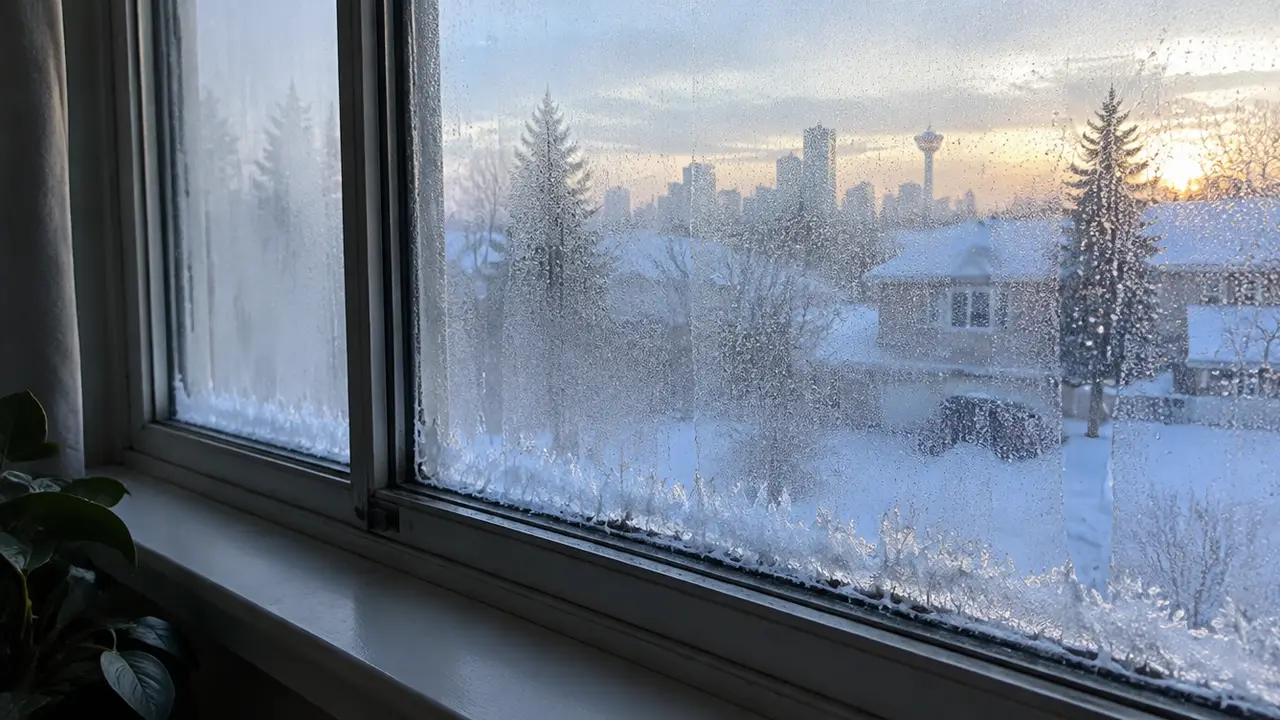
Alberta's winter air is often dry, which helps with condensation, but humidifiers set for comfort can push humidity past what cold glass tolerates. The window condensation guide explains the humidity levels Health Canada recommends and how to use the windows themselves as a gauge.
03 /How should Albertans plan for hail and wind?
Treat hail as a normal load, not a rare event. The Insurance Bureau of Canada reported in February 2025 that the Calgary-area hailstorm of August 5, 2024 had reached $3.25 billion in insured losses, with more than 130,000 claims and nearly 60,000 homes affected, making it the second-costliest insured disaster in Canadian history. IBC urges homeowners to consider impact-resistant products when repairing roofs, and argues for hail-resistant roofing and siding in the highest-risk areas.
- Exterior capping and trim: thin aluminum capping over old frames can dent; ask what gauge and profile are used and how damaged capping is replaced.
- Screens: screen mesh tears easily in hail; confirm replacement screens are available for the product line.
- Glass: broken or cracked glass after a storm is usually an insurance question, not a warranty one; see rebates, tax and insurance.
- After a storm: photograph the damage, cover openings safely, and call your insurer or broker before arranging permanent replacement.
Wind matters most in the south. CMHC's 2005 fact sheet, written under the older CSA A440 rating scheme, suggested a minimum wind-resistance rating of C3 for Alberta south of High River and C4 for the Cardston area, compared with C2 for most of Canada, and a water-resistance rating of B3 for southeastern Alberta. Current windows are rated under the North American Fenestration Standard with its Canadian Supplement, so ask the supplier to confirm the performance grade suits your location and building height; ENERGY STAR window ratings explained shows where those numbers appear.
04 /Do you need a permit to replace windows in Alberta?
Usually not for a like-for-like replacement, but permits are issued locally, so the answer comes from your municipality. Alberta's two largest cities publish clear guidance, checked on their websites in September 2026.
| Situation | City of Calgary | City of Edmonton |
|---|---|---|
| Same-size replacement | No permit if the opening size and the window's type or operation do not change | No permit for replacing windows of the same size |
| Adding or enlarging a window | Building permit required | Permit required for adding or changing the size of a window or exterior door |
| New or larger openings in a concrete foundation wall | Engineer's review if an opening is wider than 1.2 m, combined openings exceed 25 percent of the wall length, or the solid wall between openings is narrower than either opening | Engineer-stamped drawings for wall opening enlargements or new openings in foundation walls |
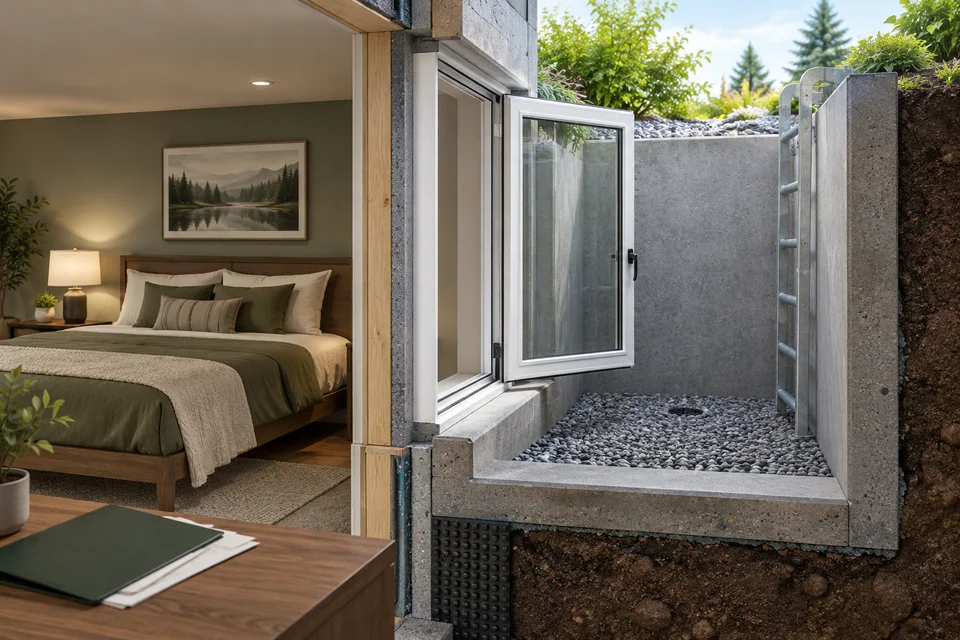
| Bedroom windows | Must meet the egress requirements of the National Building Code (Alberta Edition) | Renovation floor plans must label bedroom window dimensions and style |
Calgary's exemption is worded around keeping the same type or operation, so ask the City before switching, for example, a slider to a casement. Outside the two cities, including Airdrie, Red Deer, Lethbridge and rural municipalities, confirm with your local building or safety codes office. Bedroom windows must still work as emergency exits after replacement, and an insert shrinks the clear opening; the permits and egress guide has the dimensions.
05 /What consumer protection rules apply to window sales in Alberta?
Alberta is unusually specific about windows. The Government of Alberta states that selling household energy products door-to-door without being asked has been prohibited since January 1, 2017, and it names windows alongside furnaces, water heaters, air conditioners, natural gas and electricity contracts, and energy audits. You can still invite a salesperson to your home; the province's licensing page says the invitation must be made expressly and before the business attends, and that a business invited to do an energy audit cannot sell those products while it is in your home.
Businesses that sell renovation work in consumers' homes and take money before the work is finished need a prepaid contracting licence, and the province offers an online search to check whether a business is licensed. Alberta's consumer rules also give a 10-day right to cancel door-to-door and prepaid contracts; how to choose a window replacement company covers those rights, written contracts, insurance and WCB coverage in more detail.
06 /Is there a window rebate or grant in Alberta?
The main Alberta option found for this guide is financing, not a rebate. The Clean Energy Improvement Program (CEIP), delivered by Alberta Municipalities with participating municipalities, lends for eligible upgrades and is repaid through your property tax bill. When checked in September 2026, its residential locations page listed 26 municipalities, including Calgary, Edmonton, Airdrie, Lethbridge, Medicine Hat, Grande Prairie, St. Albert, Strathcona County and Okotoks; Red Deer was not on the list.
- Window rules: windows must be ENERGY STAR certified to the most recently published version and must replace an existing, less efficient window, with at least a one-year manufacturer warranty and a one-year contractor warranty.
- Local extras: the City of Edmonton and the City of Leduc require windows to be triple or more pane.
- Timing: Calgary's CEIP page said residential application intake was closed until winter 2026/2027 when checked, so confirm the status in your municipality before planning around it.
No province-wide window rebate turned up on official pages reviewed for this guide, and federal support has changed; see window rebates, grants, tax and insurance for the national picture, and check your utilities and municipality before you sign.
07 /What does window replacement cost in Alberta?
The site's Window Replacement Planner uses national planning ranges and does not adjust for city, so Calgary, Edmonton and Red Deer quotes should be compared with the same numbers. A medium vinyl casement with double low-e argon glass, installed as an insert, plans at $900 to $1,500; with triple glazing (×1.15) it is about $1,035 to $1,725. A ten-opening mix of six medium casements, a large picture window, two small basement windows and a patio door plans at about $11,380 to $21,690 in vinyl with triple glazing and inserts.
Wall type moves the total more than the city does. Full-frame work adds $250 to $600 per opening, and on stucco a further $300 to $800, because the stucco must be cut back and patched; see brick and stucco window replacement. Winter installs are routine in Alberta, but stucco patches and some tapes and sealants have temperature limits, which the best time to replace windows covers.
- Is your business licensed for prepaid contracting, and can I see WCB coverage and liability insurance certificates?
- What are the certified U-factor and Energy Rating for each window type, and what does triple glazing change?
- What performance grade does the product carry for wind and water, and does it suit my location?
- How are capping, screens and finishes affected by hail, and what does the warranty exclude?
- How will you handle sealants, foam and any stucco in cold weather?
- If I change a window's size or operation, who applies for the permit?
- If I plan to use CEIP, does every window meet my municipality's rules?
When quotes arrive, the Window Quote Checker compares them on price per window, warranties and ten inclusions. You can also request quotes and mention your city and wall type.
FAQQuestions people ask
Do I need a permit to replace windows in Edmonton?
The City of Edmonton lists replacing windows of the same size as work that does not need a permit. Adding a window or changing its size does, and new or enlarged foundation openings need engineer-stamped drawings. Confirm with the City for your project.
Is door-to-door window selling legal in Alberta?
Not without an invitation. Since January 1, 2017, Alberta has prohibited unsolicited door-to-door sales of windows and other household energy products. You can invite a business to your home, but the invitation must be made before it arrives.
Does CEIP cover windows in Calgary and Edmonton?
CEIP lists windows as an eligible residential upgrade if they are ENERGY STAR certified to the latest version and replace a less efficient window. Edmonton requires triple or more panes. Calgary's residential intake was closed until winter 2026/2027 when checked.
Are triple pane windows worth it in Alberta?
Usually worth pricing. Alberta's main cities have long heating seasons, and triple glazing keeps the inner pane warmer and reduces condensation. On sunny south walls, compare certified Energy Ratings, because a well-chosen double unit can collect more winter sun.
How long do I have to cancel a window contract signed at home in Alberta?
Alberta's consumer rules give 10 days to cancel a door-to-door sale or a prepaid contract, counted from when you receive your copy of the signed contract. Check the contract's cancellation section and act in writing.
Does home insurance pay for hail-damaged windows in Alberta?
Hail is usually treated as a sudden insured event, subject to your policy wording and deductible, while worn or fogged windows are not. Photograph the damage, make the opening safe, and call your insurer before permanent replacement.
SOURCESSources and further reading
- City of Calgary — Home renovations and basements (permits, windows)
- City of Edmonton — Home renovations and basements
- Alberta Municipalities — CEIP residential upgrades: doors, windows and insulation
- Government of Alberta — Door-to-door energy sales ban
- Insurance Bureau of Canada — Cost of historic Calgary hailstorm continues to rise (February 2025)