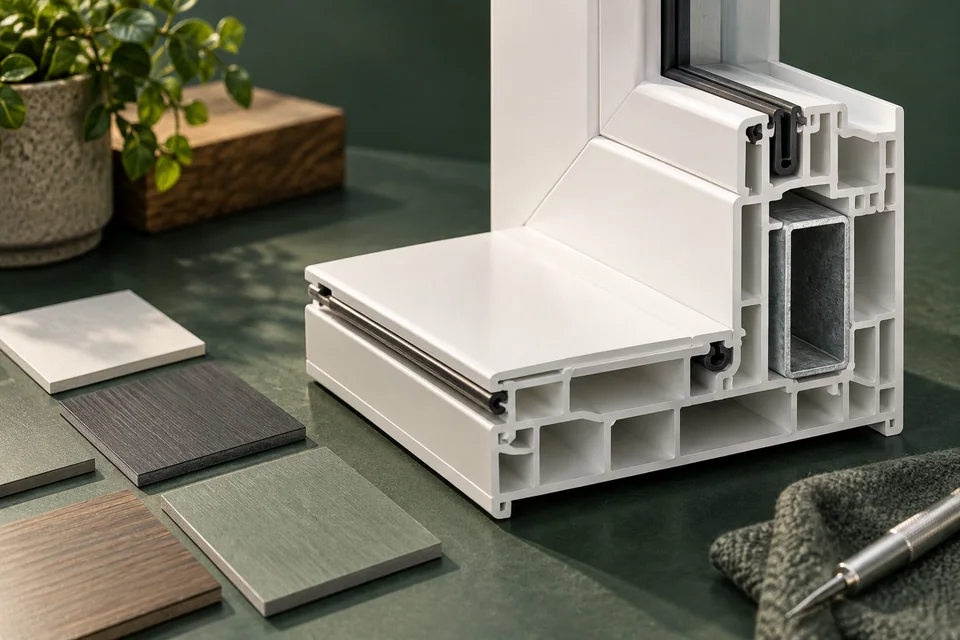
Vinyl windows use hollow, multi-chamber frames extruded from rigid PVC. They are the lowest-cost common frame option, need no painting, insulate well and suit most Canadian houses. Their weak points are greater expansion with heat, limited dark colours, bulkier profiles on some lines and quality that varies widely between product lines, so judge the specific window, not the material.
- Vinyl is the planner's baseline frame: every other material is priced as a multiple of it.
- Quality depends on the extrusion design, welded corners, reinforcement in large sashes, hardware and the glass unit, not on the word 'vinyl'.
- Vinyl expands and contracts more than fibreglass or wood with temperature, which limits very large units and very dark colours.
- Painting vinyl is possible with vinyl-safe paint, but it can void the finish or frame warranty and dark colours add heat stress.
- Most vinyl window failures are in the glass seal, hardware, weatherstrip or installation, and many are repairable.
01 /What are vinyl windows made of?
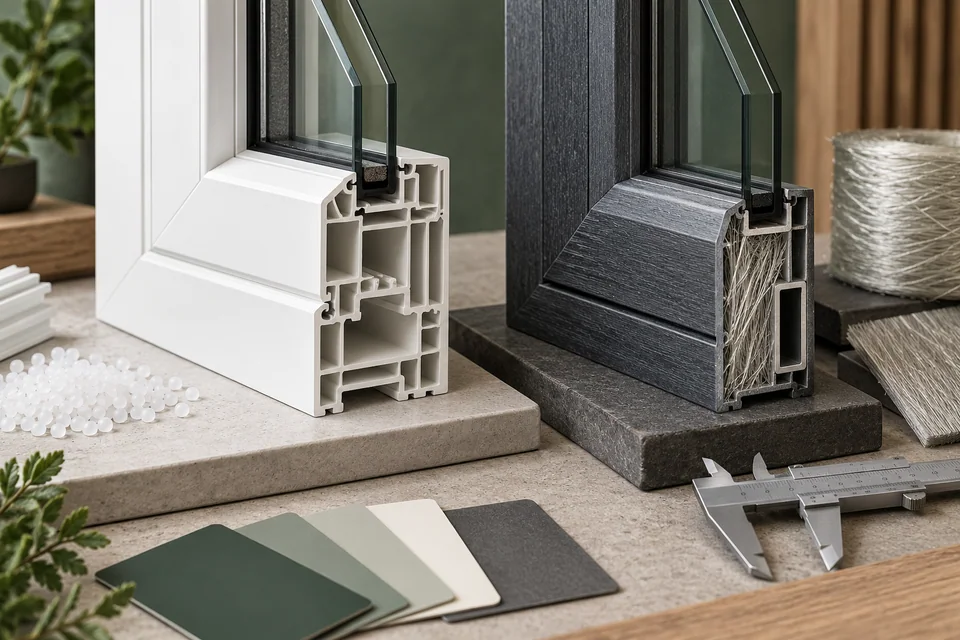
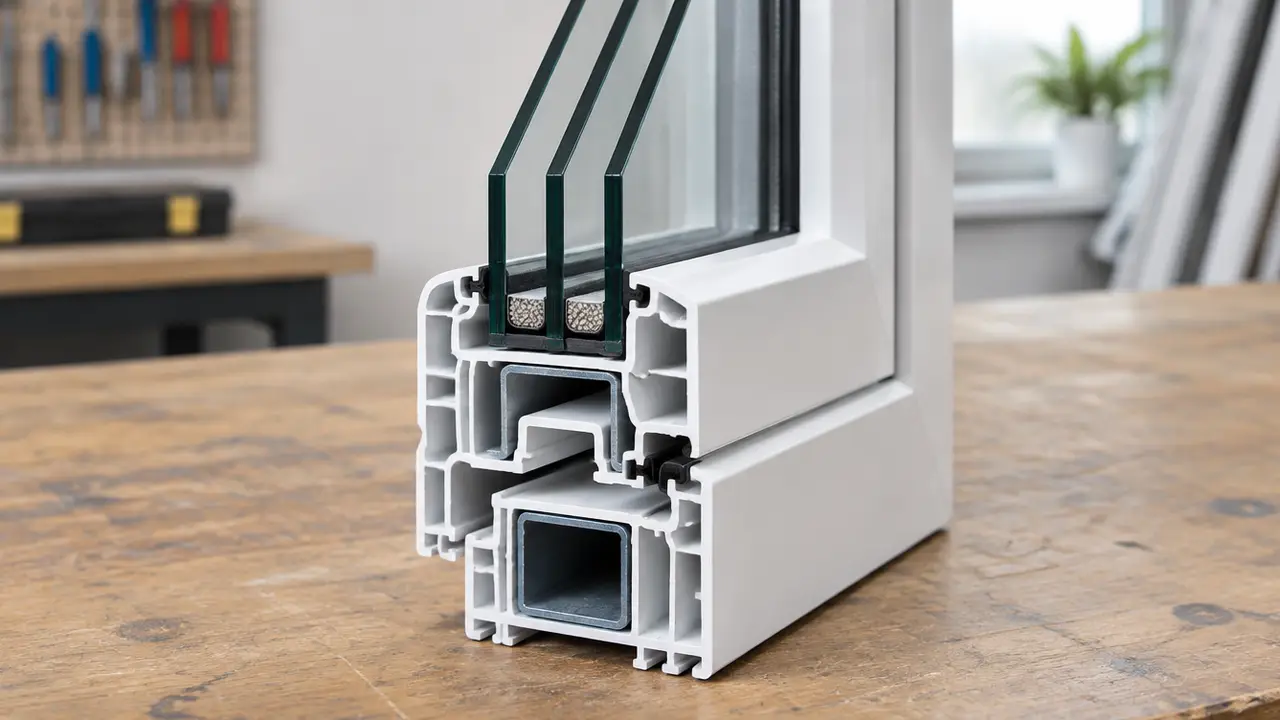
Vinyl windows are made from rigid polyvinyl chloride (PVC) compound pushed through a die to form long hollow profiles, called extrusions. The inside of each profile is divided into several chambers that trap air and stiffen the section. The profiles are cut and joined into frames and sashes, usually by heat-welding the corners, then fitted with the sealed glass unit, weatherstrip and hardware.
Large sashes and patio door panels often carry internal reinforcement, typically a steel or aluminum channel, or a fibreglass or composite insert, to keep long members straight. Some lines fill chambers with foam for a slightly better frame U-factor. None of this is visible in a showroom, so ask for a cut-away sample of the actual profile you are buying.
You will see the phrase virgin vinyl in sales material. It means the frame is extruded from new PVC compound rather than from recycled material of unknown origin. Manufacturers commonly reuse their own clean production scrap, which is not the same thing as post-consumer recycled content. What matters to you is that the compound is formulated for exterior exposure, with UV stabilizers, and that the frame warranty covers discolouration and warping.
02 /What are the advantages of vinyl windows?
- Price. Vinyl is the baseline in the site's Window Replacement Planner; fibreglass is priced at 1.3 times vinyl, wood-clad at 1.6, aluminum-clad wood at 1.7 and aluminum at 1.1.
- Low maintenance. The colour runs through the material or is a factory finish, so there is no scraping or repainting.
- Good insulation. PVC conducts heat poorly, and the chambers add insulation, so frame performance is competitive with other residential materials.
- Moisture tolerance. Vinyl does not rot, which matters on sills that see condensation every winter.
- Wide availability. Almost every window type, from casements to sliders to basement hoppers, is made in vinyl, and many local manufacturers across Canada build to order.
For most detached houses and townhouses in Canada, a well-made vinyl window with a good glass package is a sound choice. The comparison that matters is usually between a good vinyl line and a mediocre one, not between vinyl and some other material.
03 /What are the disadvantages of vinyl windows?
The main drawbacks of vinyl are thermal movement, limited stiffness in very large units, colour limits and a look that some people find bulky. None of these is a defect in a well-designed window, but each should influence which product and which sizes you choose.
| Weak point | What happens | What to look for |
|---|---|---|
| Thermal expansion | Vinyl grows and shrinks more than glass, wood or fibreglass as temperature swings | Installation gaps and fastening that allow movement; sizes within the maker's limits |
| Stiffness | Long members on big sliders and patio doors can flex | Reinforced sashes and meeting rails; heavier profiles for large units |
| Dark colours | Dark surfaces absorb sun and run much hotter, increasing distortion risk | Colours and exterior finishes the maker specifically warrants |
| Profile bulk | Wider frames can mean less glass and a heavier look | Narrower sightline profiles; compare glass area on samples |
| Repairs to the frame | Cracked welds or split profiles are hard to repair invisibly | Clean, full-strength corner welds; a frame warranty that names cracking |
Vinyl also softens at high temperatures and stiffens in deep cold. Across a Canadian year a frame can see a very wide surface temperature range, from a sunny south wall in July to a still January night. That is why installation matters so much: a frame screwed down too tightly, shimmed unevenly or packed with high-expansion foam has nowhere to go when it moves.
04 /Do vinyl windows warp?
Vinyl windows can distort if they get too hot or are installed under stress, but a properly designed and installed unit in a warranted colour should not warp in normal Canadian conditions. Most warping complaints trace back to one of four causes.
- Heat build-up on dark-coloured or painted frames, or behind dark interior blinds pressed against the glass.
- Installation stress: over-driven screws, missing shims at hinge and lock points, or expanding foam that bows the jambs inward.
- Size beyond the product's design limits, especially long, unreinforced slider panels.
- An opening that is out of square or moving, such as a sagging header or a settling wall, which a replacement window cannot correct by itself.
A sash that binds, a lock that no longer lines up or a visible bow in a jamb are all signs worth reporting under warranty early. If you are replacing a window whose predecessor warped, ask the installer to check the rough opening for movement before ordering; the insert vs full-frame guide explains when the old frame needs to come out so the opening can be inspected.
05 /Can vinyl windows be painted, and do they come in colours?
Vinyl windows can be painted with paints formulated for vinyl, but painting can void the finish or frame warranty, and a darker paint colour raises surface temperatures and distortion risk. Read the manufacturer's warranty before you paint, and prefer a factory colour if you want something other than white.
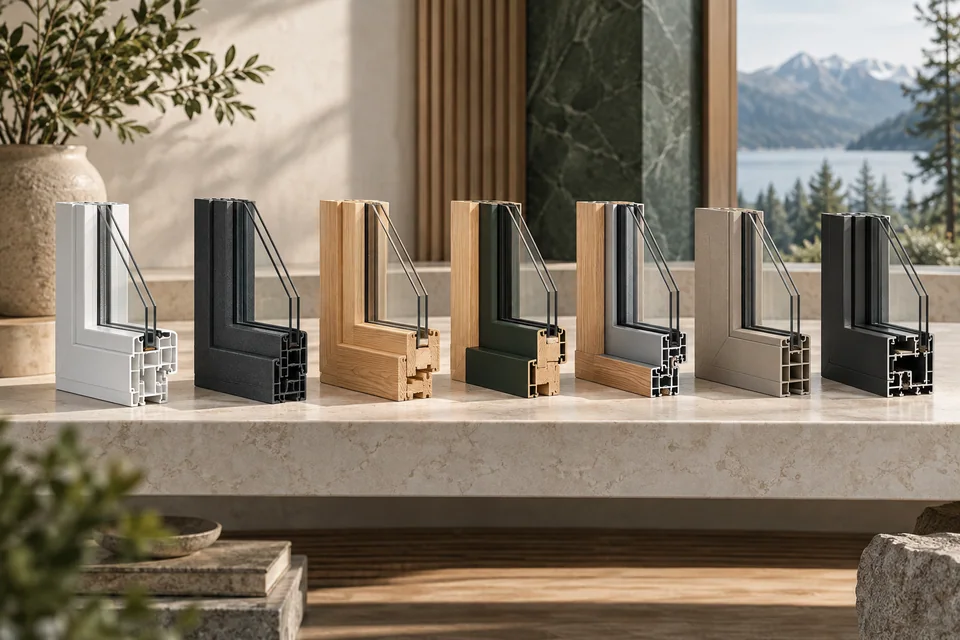
Many lines now offer factory colours, applied as a coloured compound, a co-extruded cap, a laminated film or a factory-applied coating. Black and other dark exteriors are widely available, usually with the colour only on the exterior face and white or a lighter colour inside. Ask how the colour is applied, whether the frame is reinforced for dark colours, and what the warranty says about fading and peeling. Woodgrain laminates and interior veneers are available when you want vinyl to look like wood, although up close the texture is usually recognisable.
06 /How long do vinyl windows last, and why do they fail?
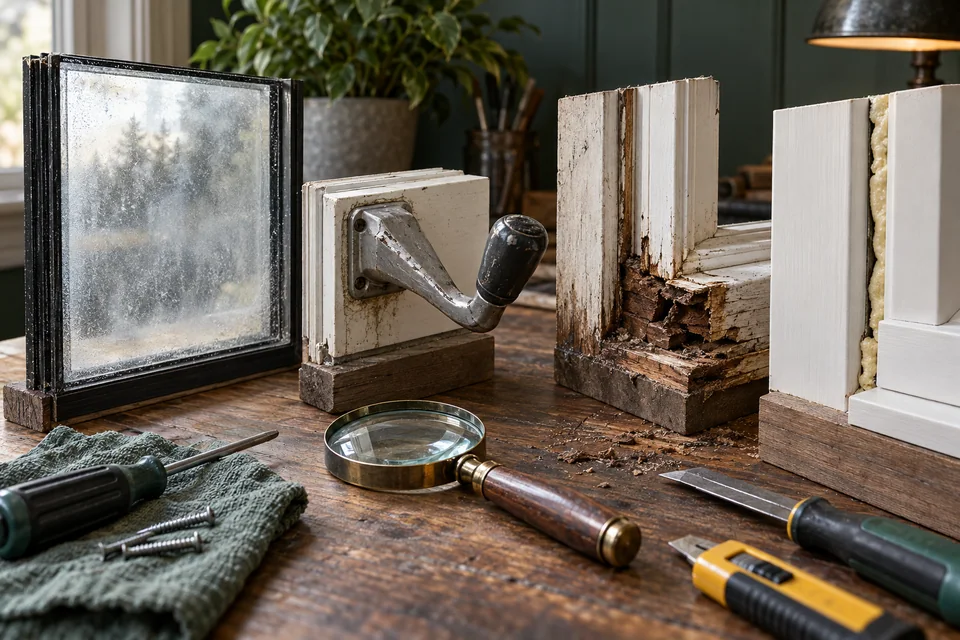
There is no single lifespan for vinyl windows. The frame itself is rarely what fails first. More often the insulating glass seal lets go and the unit fogs, the hardware wears out, the weatherstrip compresses or tears, or water gets past a poor installation. Most of those parts can be replaced without replacing the whole window.
| Symptom | Likely cause | Usual fix |
|---|---|---|
| Fog or film between the panes | Failed glass unit seal | Replace the glass unit; check the glass warranty |
| Crank spins or sash will not close tightly | Worn operator or lock hardware | Replace the operator or lock |
| Hard to open | Dirty tracks, dry weatherstrip, worn balances or a sash out of square | Clean, lubricate, adjust or replace balances |
| Draught at the sash | Compressed or torn weatherstrip | Replace the weatherstrip with the maker's profile |
| Water on the sill after rain | Blocked weep holes or failed exterior sealant or flashing | Clear weeps; inspect and repair the installation |
| Cracked corner | Weld failure or stress from installation | Warranty claim; sash or frame replacement |
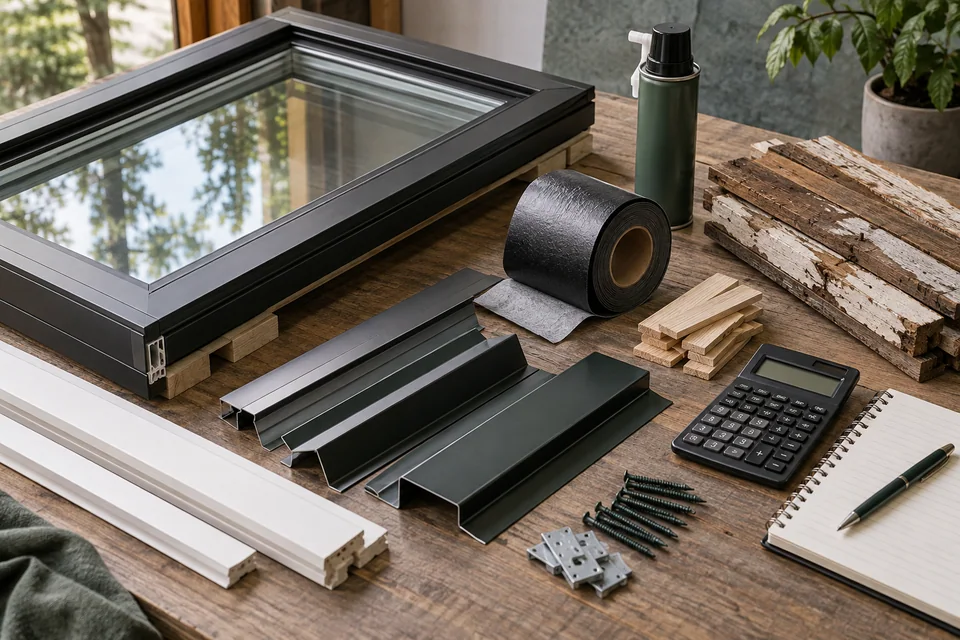
Warranty length is the manufacturer's own signal of how long it expects parts to last. Read the frame, glass seal, hardware and finish terms separately; they are often different, and labour may be covered for a shorter period than parts. The window quotes and warranties guide explains what to look for, and repair or replace windows covers when a fix is enough.
07 /How do you clean and look after vinyl windows?
Clean vinyl frames with mild soap and water and a soft cloth, and avoid abrasive pads, solvents and harsh household chemicals that can dull or stain the surface. Twice a year, vacuum the sill tracks, check that the weep holes at the bottom of the frame are open, and wipe the weatherstrip.
- Clear the tracks and weeps
Vacuum grit from sliding tracks and sill channels, then pour a little water on the sill to confirm it drains out through the weep holes.
- Lubricate moving parts
Use the lubricant the manufacturer recommends, commonly a silicone-based or dry lubricant on tracks and pivot points. Avoid greasy products that attract dirt or can degrade weatherstrip.
- Check the weatherstrip
Look for gaps, tears or flattened sections, especially at the corners of casement sashes.
- Inspect the exterior sealant
Look for cracks or gaps where the frame or capping meets the wall, and have failed sealant replaced before it lets water behind the cladding.
If a sliding sash is hard to move, clean the track first; a surprising amount of friction is dirt. If a single- or double-hung sash will not stay up, the balance springs are likely worn and can usually be replaced.
08 /How do you judge the quality of a vinyl window?
Judge a vinyl window by its certified performance, its construction and its warranty, in that order. Ask for the certified whole-window U-factor and Energy Rating, confirm ENERGY STAR certification for Canada, look at a corner cut-away to see the chambers, welds and any reinforcement, operate a sample of the same type and size, and read the warranty terms. A named product series in the quote lets you check all of this afterwards.
If you are weighing vinyl against other materials, fibreglass vs vinyl windows compares the two most common choices directly, and the window frame materials guide covers wood, clad wood, composite and aluminum. The Window Replacement Planner shows how each material changes a planning range, and you can request quotes when you have a shortlist. For a buying checklist that covers every material, see how to choose replacement windows.
FAQQuestions people ask
Are vinyl windows any good?
Yes. Good vinyl windows insulate well, need little maintenance and cost less than most alternatives. Quality varies a lot between product lines, so compare certified ratings, construction and warranties rather than assuming all vinyl is equal.
Do vinyl windows look cheap?
Some do, particularly lines with wide, flat profiles. Narrower sightlines, sculpted profiles, factory colours and interior laminates make a big difference. Look at an installed example of the exact product series before deciding.
Why are my vinyl windows hard to open?
Usually dirt in the tracks, dry or swollen weatherstrip, worn balance springs in hung windows, or a sash pushed out of square by the installation. Clean and lubricate first, then have the balances or the installation checked.
Can vinyl windows be repaired?
Many parts can: glass units, operators, locks, balances, weatherstrip, screens and exterior sealant. Cracked frames or failed corner welds are harder to repair well and are usually a warranty or replacement matter.
Do vinyl windows come in black?
Many product lines offer black or other dark exteriors, usually as a coloured cap, laminate or factory coating with a lighter interior. Ask how the colour is applied and what the warranty says about heat, fading and peeling.
Do vinyl windows off-gas?
Rigid PVC window frames are a cured, stable product, and any new-product smell usually fades. If you are sensitive to chemical odours, ask the manufacturer for its product documentation and ventilate well after installation.