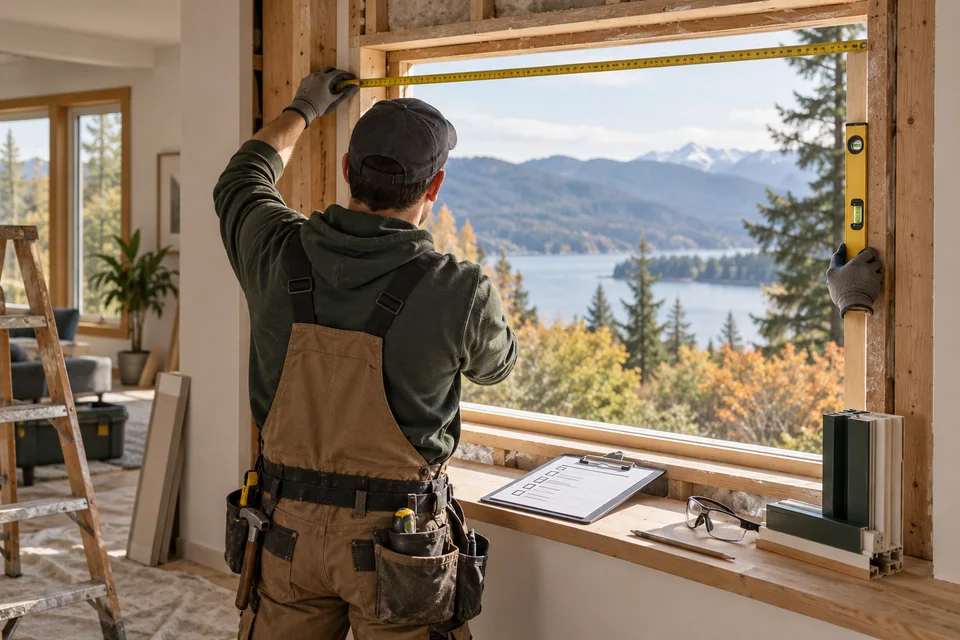
A capable DIYer can replace a ground-floor window with a same-size insert in a sound, dry frame, but the job is less forgiving than it looks. Measuring, shimming, air sealing and water management decide whether it leaks, some warranties depend on correct installation, and old paint, heavy glass and ladders add risk. Full-frame work, stucco, brick, upper floors and large units are best left to trained crews.
- NRCan's advice is to hire a professional installer; DIY makes most sense for a single ground-floor insert in a sound frame.
- Replacement windows are usually built to order, so a measuring mistake can mean paying for a second window.
- Health Canada says homes built before 1960 probably contain lead-based paint and warns against sanders and heat guns; old putty and caulking may contain asbestos.
- Read the product warranty before you start: you give up an installer's workmanship warranty, and some product terms depend on correct installation.
- Doing it yourself does not change permit or egress rules; bedroom windows must still open wide enough to escape through.
01 /Can you replace a window yourself?
Sometimes, and the deciding factor is the opening, not your confidence. A same-size insert in a sound, square, dry frame on the ground floor of a house with siding is within reach of someone who has done careful finish carpentry. The further a job moves from that, into full-frame work, masonry or stucco, upper floors, large or heavy units, or any change to the opening, the more it depends on skills and equipment that trained crews use every day. NRCan's own tip for windows, doors and skylights is to hire a professional installer, because trained installers make sure the product performs its best.
| Situation | DIY suitability | Why |
|---|---|---|
| Ground-floor insert, sound frame, siding, same size | Reasonable for an experienced DIYer | The old frame stays; the work is fitting, shimming and sealing |
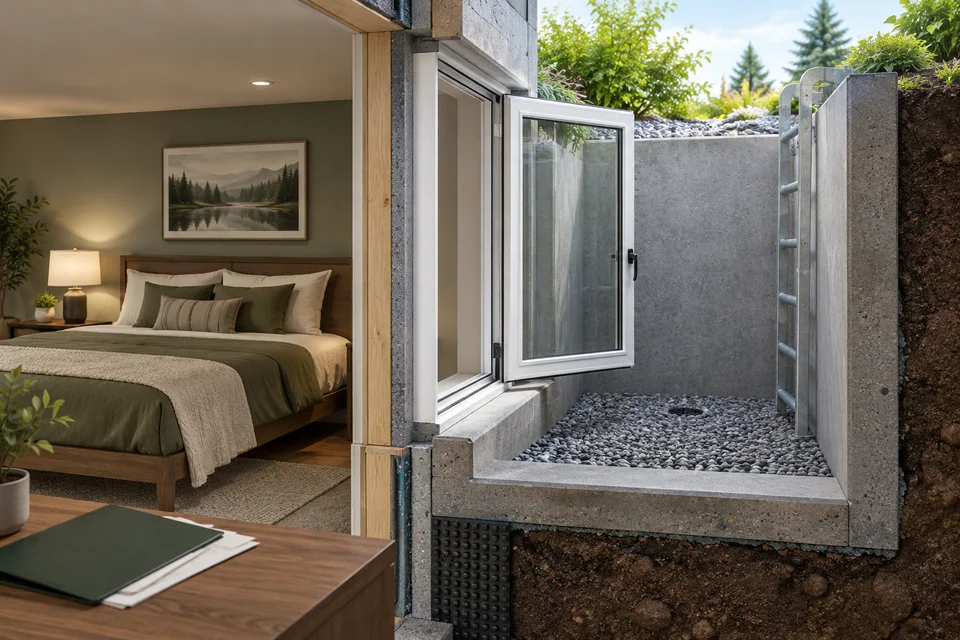
| Basement insert or hopper reached from inside | Often reasonable | Light units; check window well drainage and egress if it serves a bedroom |
| Full-frame replacement in a sided wall | Advanced | Trim and siding come off, and flashing must tie into the wall's weather barrier |
| Stucco or brick walls | Hire a trained crew | Cutting, patching and masonry details are specialist work; see brick and stucco window replacement |
| Second storey, large picture window or patio door | Hire a trained crew | Weight, reach and fall risk |
| Enlarging an opening or creating a bedroom exit | Hire, with a permit | Structural work and code review |
02 /What does a DIY insert replacement involve?
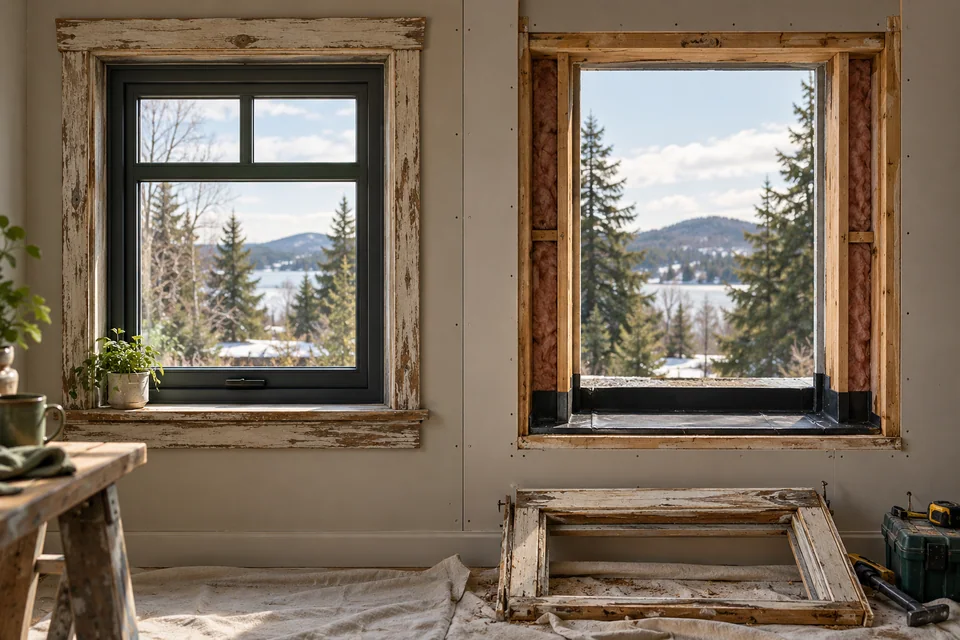
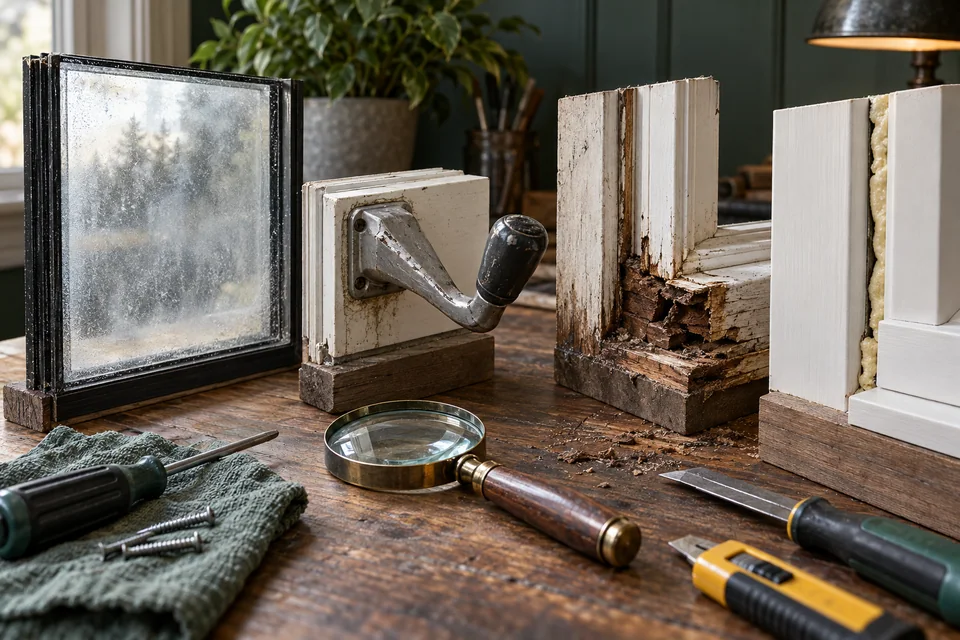
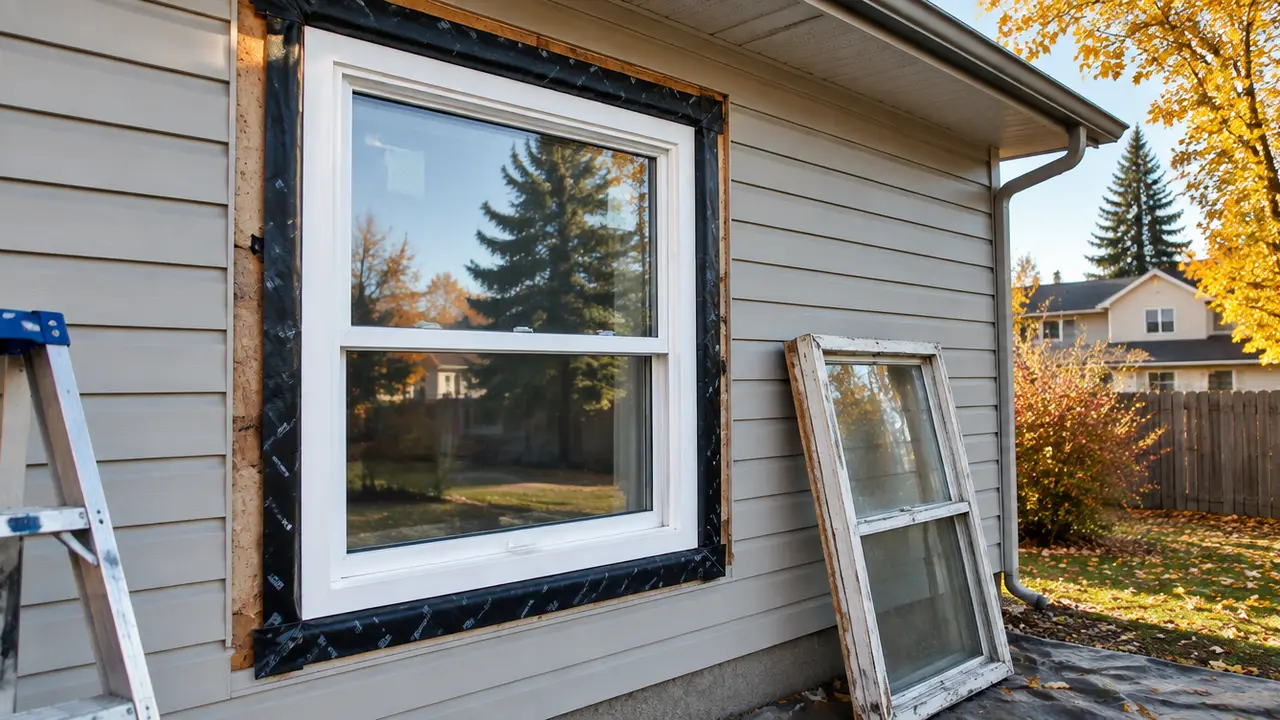
An insert replaces the sashes and fits a complete new window inside the old frame, which stays in the wall. It is the least invasive method and the usual DIY route. The insert vs full-frame guide explains when the old frame is good enough to keep; if it is soft, cracked, out of square or stained below, stop there, because an insert would seal the problem in.
- Inspect and measure
Probe the sill and lower jambs for softness. Measure the width at the top, middle and bottom and the height at both sides and the centre, check that the diagonals match, and follow the manufacturer's measuring instructions exactly.
- Order and wait
Confirm the size, operation, glass package and interior colour in writing. Windows are built to order, so allow for the lead time the supplier gives you.
- Remove the old sashes
Take off interior stops, remove the sashes and hardware, and clean the pocket. Work one opening at a time and cover it if weather turns.
- Set, shim and fasten
Dry-fit the unit, shim it level and plumb at the points the maker specifies, and fasten through the frame without over-driving screws that would bow it.
- Check operation
Open, close and lock the sash before sealing. Adjust shims until it runs smoothly and the diagonals still match.
- Insulate and air seal
Fill the gap with low-expansion window and door foam, or backer rod and sealant, and complete the interior air seal.
- Seal outside and finish
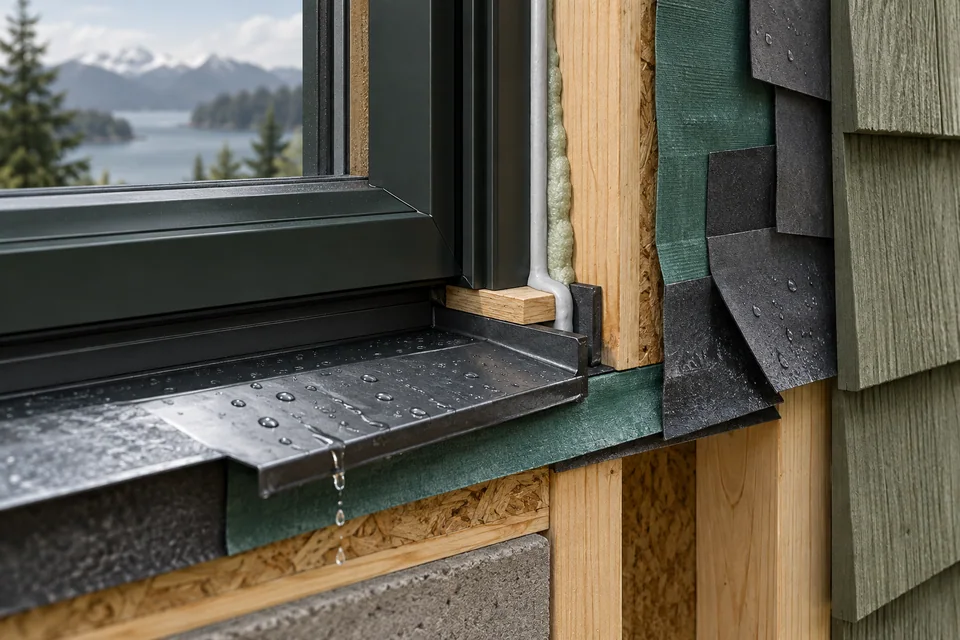
Apply exterior sealant after the interior seal is complete, keep the frame's weep holes clear, then fit trim and capping.
NRCan's retrofit guide explains the order in the last two steps. Small gaps of about 6 mm or less can be insulated and caulked; larger ones need backer rod with caulking or low-expansion foam. Exterior caulking is the last and weakest defence against rain, and it should go on only after interior sealing is complete, because sealing the outside first can trap warm, moist air in the wall. Installation, flashing and sealing covers the details.
03 /What tools and materials will you need?
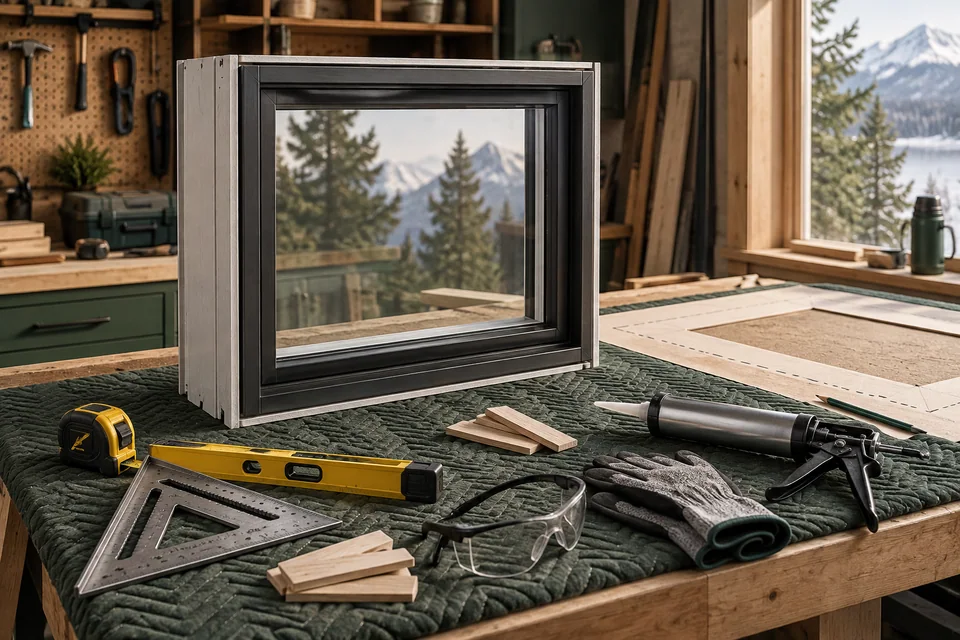
- Measuring and layout: tape measure, level, square and a notebook with a sketch of each opening.
- Removal: pry bar, utility knife, multi-tool or oscillating saw, and a drill or driver.
- Installation: shims that will not rot or compress, the fasteners or clips the manufacturer specifies, low-expansion foam made for windows and doors, backer rod and a sealant compatible with the frame and the wall.
- Protection: cut-resistant gloves, eye protection, a good-quality respirator where dust is possible, drop sheets and plastic sheeting.
- People: a second person for lifting, holding the unit plumb and passing it through the opening.
Buy materials for the job you are doing, not for a generic 'window installation kit'. Ask the window supplier which foam, sealant and fasteners they approve for the frame, because installation instructions and warranty terms sometimes name them.
04 /What are the safety risks of replacing windows yourself?
Old finishes are the hidden hazard. Health Canada says a home built before 1960 probably contains lead-based paint, and one built between 1960 and 1990 may have it on the exterior. It warns against removing that paint with sanders, heat guns or blowlamps, which create toxic dust and fumes, and advises keeping children and pregnant women away from the work, sealing off the area with plastic sheeting and tape, and wearing goggles, gloves and a good-quality breathing mask. Health Canada also lists putty, caulking and sealants among older building products that may contain asbestos, and recommends having suspect materials tested by a professional before renovating.
- Glass weight: ordinary glass weighs roughly 2.5 kg per square metre for each millimetre of thickness, so a triple-glazed unit carries three panes' worth before the frame is counted. Lift with two people.
- Broken glass: old panes can crack during removal. Tape them, wear cut-resistant gloves and eye protection, and keep people and pets out of the room.
- Falls: ladders and upper-floor openings cause serious injuries. CMHC's fact sheet adds that an insect screen is not a fall-prevention device, so never lean on one.
- Weather: an open wall lets in rain and cold; have plastic sheeting and a plan to close the opening the same day.
05 /Will installing windows yourself affect the warranty?
It can, in two ways. First, you give up the installer's workmanship warranty, the promise that a professional will come back and fix leaks or draughts caused by the installation. If water later gets in, the cost of opening the wall is yours. Second, a product warranty can be conditional on installation to the maker's instructions, and some exclude failures caused by improper installation, so read the warranty before you order and keep photos of each step.
Some suppliers sell windows only through their own installers or dealers, and some offer a supply-only price. If a supplier will sell to you, ask for their installation instructions and approved materials in advance, and ask whether registering the warranty requires anything from the installer. The quotes and warranties guide explains how product and installation warranties differ.
06 /Do you need a permit to replace windows yourself?
The same rules apply whoever does the work. A same-size replacement in a house usually needs no permit, while adding or enlarging windows does, and some cities also treat a change in a window's type or operation as a trigger. Check with your municipality before you order, and see permits and egress for how Calgary, Edmonton and Toronto word it.
Bedroom windows deserve extra care. NRCan's retrofit guide reminds homeowners that building codes require every bedroom to have at least one window that opens from the inside for escape. An insert makes the clear opening smaller, so measure the proposed window's clear opening in its fully open position before ordering. Building codes call for safety glass in certain locations, such as doors and some low or large panes, so ask the supplier whether any of your openings need tempered glass. In a condominium, get written approval from the board before touching windows.
07 /Does DIY window replacement save money?
It saves the installation labour, not the window. The site's Window Replacement Planner prices installed windows; a medium vinyl casement with double low-e argon glass installed as an insert plans at $900 to $1,500, including removal, installation, disposal, interior trim and exterior capping. The site does not publish a supply-only range, so get a supply-only price from the supplier and compare it with that installed range, then add foam, sealant, shims, trim, capping, disposal and any tools you need.
Count the risks in the comparison: a second window if a measurement is wrong, repairs if rot appears, and a leak that shows up a year later with no warranty to call on. For a single sound opening, DIY can pay off; for a whole house, the difference often narrows once those risks are priced in. If you decide to hire, how to choose a window replacement company explains what to check, or you can request quotes for the openings you would rather not tackle.
FAQQuestions people ask
Is replacing a window a realistic DIY job?
For a same-size insert in a sound ground-floor frame, often yes, if you measure carefully and follow the maker's instructions. Full-frame work, stucco, brick, upper floors, patio doors and enlarged openings are better left to trained crews.
Can I install a replacement window from inside by myself?
Many inserts are set from inside, which avoids ladders, but you still need to seal and cap the exterior. A second person makes lifting and plumbing the unit far safer, especially with triple glazing.
What foam should go around a replacement window?
Low-expansion foam made for windows and doors, or backer rod with sealant. High-expansion foam can bow the frame and make the sash bind. NRCan suggests insulation plus caulking for gaps of about 6 mm or less.
Can I replace a rotted window sill myself?
A rotted interior stool is trim carpentry. Rot in the frame's own sill or the framing below usually means water is getting in, which calls for full-frame replacement so the opening can be inspected and flashed properly.
Can I replace fogged window glass myself?
Replacing a sealed glass unit means ordering an exact-size unit, removing the glazing stops, and resetting and sealing the new unit without damaging the sash. Glass shops and window service companies do this routinely, and it may be covered by the glass seal warranty.
Do I need two people to install a window?
For anything larger than a small basement unit, yes. Modern units, especially triple-glazed ones, are heavy and awkward, and one person needs to hold the window plumb while the other shims and fastens.
SOURCESSources and further reading
- Natural Resources Canada — Key features and helpful tips: windows, doors and skylights
- Natural Resources Canada — Keeping the Heat In, Chapter 8: Upgrading windows and doors (PDF)
- Health Canada — Lead-based paint
- Health Canada — Health risks of asbestos
- CMHC — About Your House: The ABC's of windows (2005, PDF)